

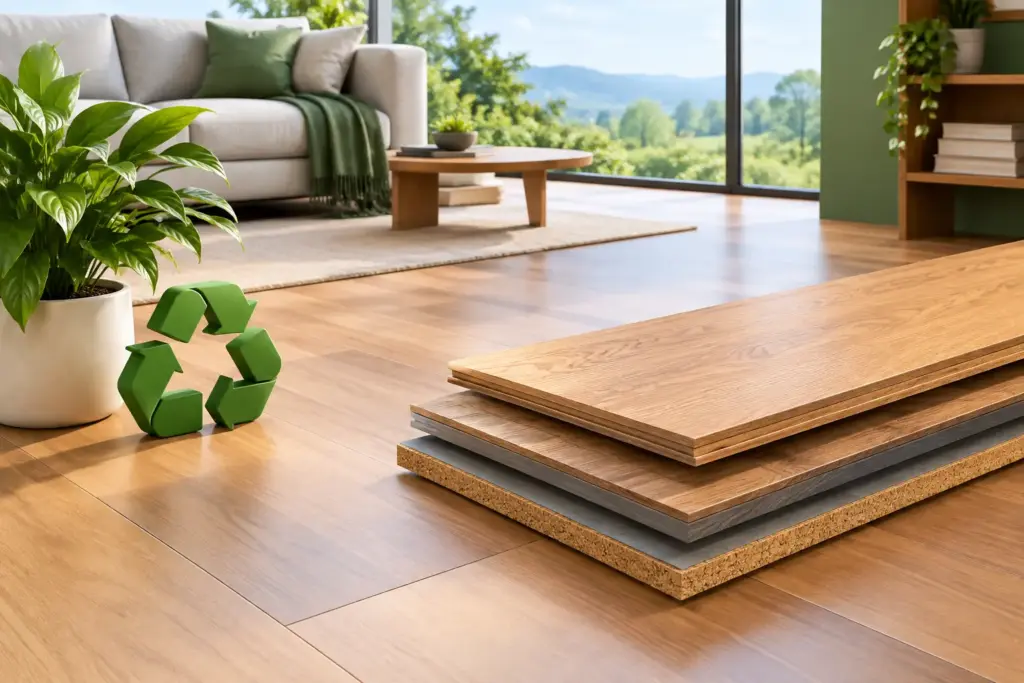
A flooring finish can look responsible in a sample box and still create avoidable waste on a jobsite. Sustainable flooring is not defined by one label, a recycled-content claim, or a natural-looking surface. For homeowners, designers, contractors, and procurement teams, the better question is: will this floor perform reliably for years, reduce replacement cycles, and support healthier, lower-maintenance interiors?
That question changes how flooring should be specified. Material composition matters, but so do service life, installation waste, cleaning requirements, repair options, manufacturing consistency, and what happens when the floor is eventually removed. A product that needs early replacement rarely represents a sustainable choice, regardless of its initial appearance.
What Sustainable Flooring Should Mean in Practice
A responsible flooring decision considers the full working life of the material. This includes where raw materials come from, how efficiently the product is manufactured, how much material is wasted during installation, and how the floor performs under daily traffic, moisture, cleaning, and impact.
For commercial projects, durability often has the largest practical effect. Replacing flooring in a hotel corridor, retail store, rental unit, or office creates new material demand while adding demolition, transport, labor, downtime, and disposal costs. A floor that maintains its appearance and structural stability over a longer period can reduce those repeated impacts.
Indoor performance belongs in the same conversation. Low-emission materials, responsible adhesives, and proper subfloor preparation all contribute to better interior conditions. Flooring should also be easy to clean without aggressive maintenance chemicals. Sustainable choices are not only about the factory gate. They should make day-to-day operation simpler for the people using the space.
Sustainable Flooring Is a Lifecycle Decision
The strongest specification process looks beyond a single environmental attribute. Recycled content can be valuable, for example, but it should not be treated as a complete answer. Material quality, product durability, and end-of-life options determine whether that recycled content translates into a genuinely longer, more efficient flooring life.
Natural materials such as hardwood, cork, bamboo, and linoleum can offer compelling benefits when responsibly sourced and suited to the environment. Their performance varies significantly. Solid wood can be refinished, but it may not be the right choice for high-moisture areas. Cork provides warmth and comfort underfoot, yet requires careful protection in demanding commercial settings. Bamboo grows quickly, but manufacturing methods and adhesive systems still deserve review.
Vinyl-based flooring, including stone plastic composite flooring, requires a different and honest assessment. SPC is not a renewable natural material. However, a high-quality SPC floor can offer long service life, water resistance, resistance to scratches and termites, and low-maintenance performance. Those characteristics can be especially relevant in multifamily housing, retail, hospitality, kitchens, and moisture-prone interiors where premature flooring failure would be costly.
The key is to evaluate the entire product rather than relying on a category label. Ask how it is made, whether it uses stable and consistent raw materials, how it performs in real conditions, and whether recycling pathways exist in the markets where it will be used.
Why material consistency matters
In flooring production, inconsistent batches can create more than visual variation. They can affect click-lock fit, plank stability, wear-layer performance, and installation efficiency. When products must be rejected, replaced, or reworked, waste increases quickly.
For SPC flooring, 100% virgin materials can support more controlled manufacturing and consistent product performance. This does not automatically make a product sustainable, but it can help prevent quality issues associated with poorly controlled inputs. Reliable composition, precision dimensions, and dependable locking systems help installers use more of what arrives on site and reduce avoidable replacements later.
Choose for the Conditions, Not Just the Look
A sustainable floor is one that fits the space. A beautiful light oak tone may suit a residential living room, while a busy commercial lobby may need a surface with stronger scratch resistance, easier cleaning, and greater tolerance for rolling loads and heavy foot traffic.
Start with moisture exposure. Entryways, kitchens, bathrooms, laundry areas, and ground-floor spaces often need water-resistant materials and careful attention to subfloor conditions. SPC click flooring can be a practical option in these areas because its rigid core handles everyday moisture exposure well. It is still necessary to follow installation requirements, especially around expansion gaps, flatness, transitions, and prolonged standing water.
Then consider traffic and maintenance. A floor that requires specialized cleaning products or frequent refinishing may be appropriate for a premium, low-traffic setting, but less suitable for a large commercial portfolio. Durable surfaces that clean efficiently with routine methods can reduce chemical use, labor, and operational disruption over time.
Acoustic performance should also be specified early. In apartments, hotels, and offices, sound transfer can affect occupant comfort and project acceptance. Flooring with appropriate underlayment compatibility and sound-reduction properties can support a quieter interior without adding unnecessary layers or later corrective work.
Installation Waste Is Part of the Calculation
Flooring waste is often decided before the first plank is installed. Accurate site measurement, room layout planning, and coordination around doorways, built-ins, and transitions can reduce offcuts. Product dimensions matter as well. Longer or wider planks may create a more spacious visual effect, but they can lead to more cutting in small or irregular rooms.
Click-lock flooring can support cleaner installation because it is designed to connect mechanically rather than requiring adhesive across the entire floor. This may reduce adhesive use and speed up installation, particularly on renovation projects. Välinge 2G and 5G locking systems are engineered to provide secure plank connections, helping installation teams work efficiently when the subfloor is properly prepared.
Fast installation should never be confused with careless installation. A poorly leveled subfloor, inadequate acclimation where required, or rushed perimeter detailing can shorten the life of any floor. Contractors and project managers should treat installation guidance as part of the product specification, not an afterthought.
Questions Buyers Should Ask Before Specifying
Whether sourcing for a single home or a multi-site commercial rollout, buyers should request clear answers about performance and manufacturing. Four questions are especially useful:
- What is the expected service life under the actual traffic, moisture, and maintenance conditions of this project?
- What raw materials are used, and how is batch-to-batch quality controlled?
- Does the product meet applicable indoor air quality, fire, and performance requirements for the project location?
- What happens if a plank is damaged, discontinued, or needs replacement years after installation?
The fourth question is frequently overlooked. Replacement capability depends on color consistency, inventory planning, production reliability, and supplier communication. For project teams, this can matter as much as the original purchase price. A supplier that can maintain dependable quality and provide clear support reduces risk throughout the flooring lifecycle.
Design Longevity Reduces Unnecessary Replacement
Sustainability also has a design dimension. Floors are often replaced because they look dated, not because they have failed. Selecting balanced wood tones, refined stone visuals, and versatile plank formats can extend the perceived life of an interior.
This does not mean every project should be neutral. It means design choices should suit the intended lifespan of the space. A dramatic trend can work well in a short-term retail concept, while a residential development or hotel renovation may benefit from a calmer, more adaptable palette. Collections built around Nordic, Rustic, Vintage, Minimalist, Contemporary, and Urban styles give designers room to match a concept without treating flooring as disposable décor.
PLUZ SPC approaches this balance through precision-made SPC flooring designed for consistent performance, practical installation, and modern interior applications. For buyers comparing options, the most useful product conversation is not simply whether a floor is green. It is whether the floor is engineered to stay in service, retain its appearance, and remain manageable for the people responsible for it.
The right sustainable flooring choice is rarely the one with the loudest claim. It is the material that fits the project, is installed correctly, performs predictably, and earns a long life in the space it was selected to serve.