

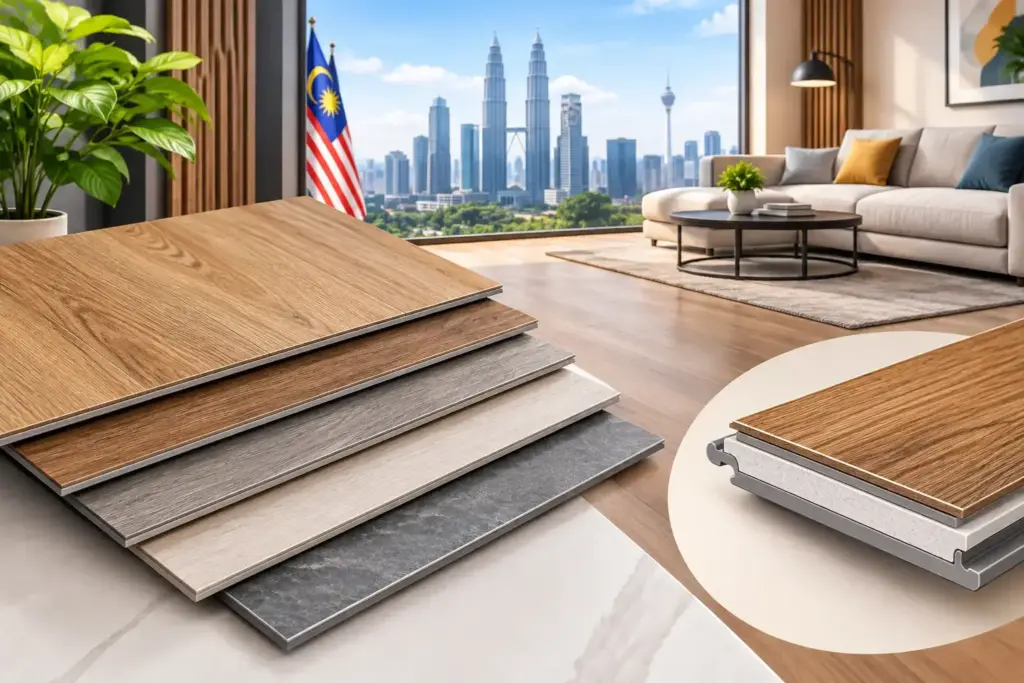
A flooring sample can look convincing in a showroom and still fail the real test: a contractor installing thousands of square feet on a tight schedule, a retail buyer needing repeatable stock, or a homeowner living with the floor through spills, pets, and moving furniture. This Malaysian flooring review looks beyond surface appearance to the details that determine whether SPC flooring performs as promised.
For U.S. buyers evaluating supply from Malaysia, the central question is not simply where a plank is made. It is whether the manufacturer controls the materials, production discipline, locking system, and support needed to deliver a consistent finished floor.
What Buyers Should Expect From Malaysian SPC Flooring
Malaysia has become a practical sourcing option for stone plastic composite flooring, particularly for buyers seeking alternatives to China-based supply. That value is not automatic. Manufacturing location alone does not guarantee quality, stable specifications, or reliable lead times. The better question is how the factory builds and verifies each product.
A credible SPC program begins with material selection. Flooring made with 100% virgin materials offers more predictable density, dimensional stability, and visual consistency than material built around uncontrolled recycled content. Recyclable flooring can still be responsibly produced, but the formulation must be managed carefully. Too much variation in the core can affect the plank’s feel, strength, and ability to stay flat after installation.
For commercial teams, consistency across batches matters as much as the initial sample. A project may be installed in phases, while distributors need confidence that a successful color can be reordered without unexpected shifts in tone, embossing, or plank dimensions. Precision manufacturing and batch control are therefore purchasing requirements, not minor factory claims.
Malaysian Flooring Review: The Features That Matter
SPC is valued for its rigid core, water resistance, and everyday durability. Yet products sold under the same category can differ significantly. Buyers should assess the complete construction rather than relying on a single performance label.
Core stability and surface protection
A stable SPC core helps resist movement caused by normal interior temperature changes and daily traffic. This is especially relevant in large residential rooms, hospitality spaces, retail environments, and multi-unit projects where flooring must retain a clean, aligned appearance over time.
The wear layer and protective coating deserve equal attention. Scratch resistance is not a promise that a floor cannot be marked by dragged metal furniture or abrasive grit. It means the surface is engineered to better withstand typical use when proper care practices are followed. Entry mats, furniture pads, and regular debris removal still protect the finish and extend its service life.
Water resistance is another term that benefits from practical interpretation. SPC flooring is well suited to kitchens, living areas, bedrooms, and many moisture-prone interior settings because the plank itself does not absorb water like traditional wood-based flooring. However, standing water can still reach wall edges, expansion gaps, or subfloor conditions. Proper installation preparation remains essential.
Click-lock performance is a jobsite issue
Click flooring should reduce installation time, not create uncertainty at the edge of every row. Välinge 2G and 5G click-lock systems are recognized for creating a secure mechanical connection between planks. The difference becomes visible on the jobsite: cleaner alignment, less reliance on adhesives, and a more efficient installation process when the subfloor is properly prepared.
The locking profile must also be manufactured accurately. A well-designed system can underperform if plank milling is inconsistent. Conversely, a precisely produced click system can help contractors maintain pace while reducing installation frustration. For project managers, that translates into fewer avoidable delays and less risk of callbacks tied to poorly connected joints.
Underfoot comfort and acoustic control
SPC is inherently denser and firmer than some other resilient flooring types. Buyers looking for a very soft, cushioned feel may prefer a different construction or should choose an appropriate attached backing and underlayment system. That is a genuine trade-off, not a defect.
Where SPC performs well is in balancing a solid walking surface with sound-reducing features. Products designed with acoustic backing can help reduce footfall noise in apartments, offices, and family homes. The final acoustic result depends on the full floor assembly, including subfloor structure, underlayment requirements, and building standards.
Design Should Be Repeatable, Not Just Attractive
Flooring is one of the largest visual surfaces in an interior. A plank can carry a minimalist space with clean, light oak tones, give a retail setting a contemporary finish, or add warmth to a hospitality project through rustic or vintage-inspired textures. The strongest collections are designed for this range of applications without sacrificing manufacturing consistency.
When reviewing a Malaysian supplier, request more than a beauty shot or a small swatch. Look at full planks under different lighting, examine repeat patterns, and ask how color is controlled between production runs. A floor that looks balanced in a sample board can feel overly repetitive across a large open plan if the pattern variation is too limited.
Design selection should also reflect maintenance realities. Very pale tones may show dark debris more readily, while very dark finishes can reveal dust and scuffs. Medium natural wood colors often offer a forgiving balance for active households and commercial interiors. The right choice depends on the project’s lighting, traffic, cleaning routine, and overall design direction.
Factory Support Separates Supply From Partnership
A flooring purchase can become complicated after the order is placed. Packaging details, production timing, installation questions, shipment coordination, and warranty documentation all influence the customer experience. This is why contractors, importers, and developers should evaluate supplier responsiveness early in the process.
For trade buyers, useful questions include whether the factory can support OEM specifications, maintain dependable communication during production, and provide clear technical information for installers and sales teams. Buyers should also confirm minimum order requirements, sample availability, packaging standards, and how the supplier handles color continuity for future orders.
For residential buyers, the focus is simpler but no less important: Is the product suitable for the room? Is the subfloor level and dry? Are expansion requirements understood? Does the seller provide practical installation guidance and clear warranty terms? A premium plank cannot compensate for poor site preparation.
PLUZ SPC reflects the type of Malaysian manufacturing partner buyers should look for: factory-led quality control, virgin material standards, dependable click-flooring technology, and direct support for both project and residential requirements.
Who Is Malaysian SPC Flooring Best For?
Malaysian-made SPC can be a strong fit for distributors seeking a stable non-China manufacturing source, contractors managing schedule-sensitive installations, and developers who need durable flooring across repeated unit layouts. It can also suit homeowners who want a wood-look floor with low-maintenance, water-resistant performance.
It may be less suitable where a project specifically requires real hardwood, a deeply cushioned floor, or a material intended for exterior exposure. SPC is designed for interior applications. Clear expectations protect both the buyer and the finished space.
The most useful review does not end with a country-of-origin label or a list of claims on a brochure. Ask for samples, inspect the locking profile, verify material and wear-layer specifications, and discuss the conditions of the actual project. The right flooring partner will welcome those questions because reliable performance starts long before the first plank is clicked into place.