

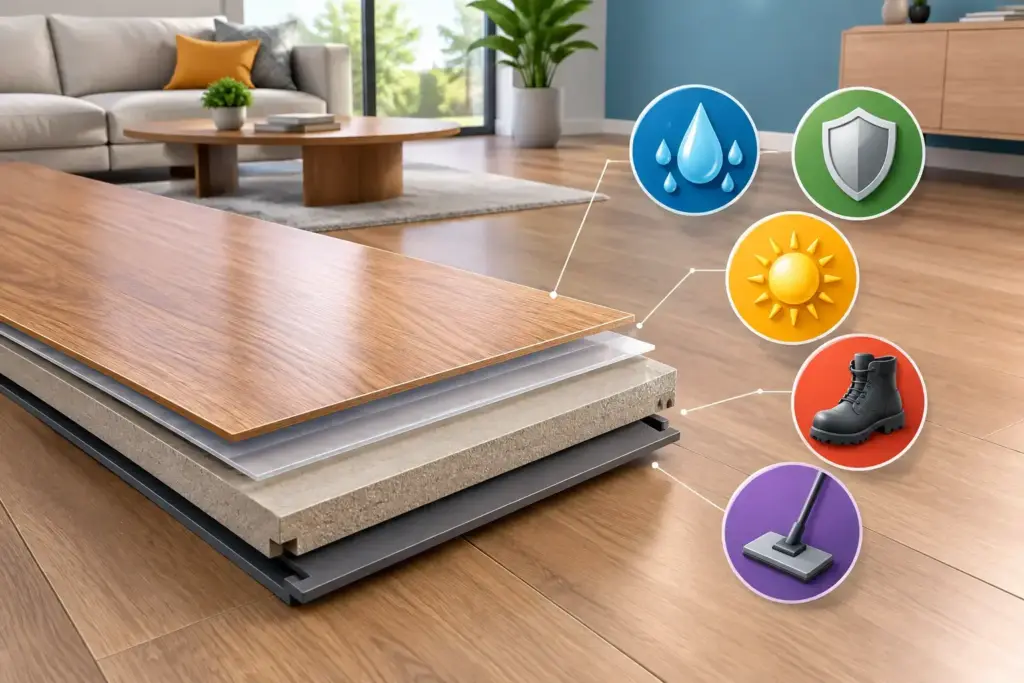
A floor can look excellent on installation day and still disappoint years earlier than expected if its specification does not match the space. SPC flooring lifespan is not determined by the rigid core alone. It comes down to material quality, wear-layer thickness, traffic level, installation conditions, and how the floor is maintained after handover.
For homeowners, the question is usually, “How long will it look good?” For contractors, developers, and flooring buyers, it is also a question of replacement cycles, warranty exposure, maintenance budgets, and consistency across a project. A well-specified SPC floor can provide many years of dependable service, but no flooring category performs indefinitely under every condition.
How Long Does SPC Flooring Last?
In a typical residential setting, quality SPC flooring can last 15 to 25 years or longer with proper installation and routine care. In commercial environments, the expected service life is often closer to 8 to 15 years, depending on foot traffic, rolling loads, cleaning practices, and the selected wear layer.
These are practical planning ranges, not promises that every floor will reach the same date. A quiet bedroom, a busy family kitchen, a retail aisle, and a hotel corridor place very different demands on the surface. The same plank can perform exceptionally in one application and wear faster in another.
SPC, or stone plastic composite flooring, has a dense, rigid core designed for dimensional stability and everyday impact resistance. Its water-resistant construction makes it a strong fit for kitchens, entryways, and many commercial interiors where moisture is a concern. However, water resistance should not be confused with immunity from poor subfloor conditions, standing water at perimeter gaps, or surface damage caused by abrasive dirt.
The Wear Layer Sets the Surface Life
The wear layer is the clear protective layer above the printed décor film. It is one of the clearest indicators of how well a plank can resist scuffs, scratches, stains, and gradual surface wear. A thicker wear layer generally supports a longer SPC flooring lifespan, particularly in active spaces.
For lower-traffic residential rooms, a lighter residential-grade wear layer may be appropriate. Homes with pets, children, frequent entertaining, or direct access from outdoors benefit from a more substantial option. Retail, office, hospitality, and multifamily common areas typically require commercial-grade specifications that can handle sustained traffic.
Thickness alone is not the whole story. The quality of the protective coating, the strength of the vinyl surface, and consistency in factory production also matter. A floor should be selected according to the actual use of the room, not only the appearance of the sample board.
Virgin Materials Support Consistent Performance
The core and backing influence how a floor handles temperature changes, daily impacts, and the stresses placed on click-lock joints. SPC manufactured with 100% virgin materials is better positioned to deliver consistent density, dimensional stability, and visual quality from batch to batch.
This matters for larger projects and repeat orders. Inconsistent raw materials can introduce variation in plank dimensions, locking precision, or surface appearance. For contractors and distributors, those variations can create installation delays and more difficult quality control on site.
PLUZ SPC uses virgin, recyclable materials and precision manufacturing to support dependable plank performance. For project buyers, reviewing material specifications alongside visual design is a practical way to protect long-term value.
Installation Has a Direct Effect on SPC Flooring Lifespan
Even a high-quality plank can fail prematurely when installation fundamentals are ignored. SPC click flooring is designed for efficient installation, but it still requires a dry, clean, level, and structurally sound subfloor.
An uneven subfloor can place repeated stress on the joints as people walk across the floor. Over time, this may lead to movement, joint separation, or damage at the locking system. Hollow spots and excessive flex are not merely cosmetic concerns. They reduce support beneath the planks and can shorten the usable life of the installation.
Moisture testing remains essential, especially over concrete slabs. While SPC itself is water-resistant, moisture can affect adhesives used at transitions, contribute to conditions beneath the flooring, and signal broader site issues. Correct vapor control and adherence to the installation instructions are part of a durable system.
Expansion space around walls, fixed cabinetry, columns, and door frames is equally important. A floating floor needs room to respond to normal environmental movement. Pinning it beneath heavy fixed elements or failing to allow perimeter clearance can cause buckling, joint pressure, and visible distortion.
Click-Lock Quality Matters at the Joints
The click system is where individual planks become a floor. A precisely engineered locking profile helps installers achieve tight, stable joints and supports efficient replacement when a damaged plank must be addressed.
Välinge 2G and 5G click-lock systems are designed to provide reliable mechanical engagement when installed correctly. The installer still needs to inspect every joint, confirm that the subfloor meets tolerance, and avoid forcing damaged or misaligned planks into place. A fast installation is valuable only when it remains accurate.
For commercial projects, mockups can be worthwhile before full installation. They allow the project team to confirm the selected color, direction of lay, transition details, substrate preparation, and performance expectations in real site conditions.
Traffic, Furniture, and Cleaning Determine Daily Wear
Most surface wear comes from grit, not dramatic accidents. Fine sand, soil, and debris carried in on shoes act like abrasives under foot traffic. Entry mats at exterior doors, frequent dry sweeping, and prompt cleanup do more for a floor’s appearance than many owners expect.
Use felt protectors under chairs, tables, and movable furniture. For desks, rolling chairs should sit on an appropriate protective mat or use soft casters designed for resilient flooring. Heavy furniture should be lifted rather than dragged, and concentrated loads should be reviewed before placement, especially in commercial settings with displays, equipment, or wheeled carts.
Cleaning should be simple and consistent. Sweep, vacuum with a hard-floor setting, or use a dry microfiber mop to remove loose grit. Damp mop with a manufacturer-approved, pH-neutral cleaner when needed. Avoid steam cleaning, abrasive pads, wax-based products, and harsh solvents unless the flooring manufacturer specifically permits them. These products can dull the protective coating or leave residue that attracts more dirt.
Sun exposure is another consideration. Quality flooring is designed for normal indoor light, but intense direct sunlight and heat through large windows can challenge any finished surface over time. Window treatments, UV-control film where appropriate, and suitable expansion allowances help manage those conditions.
Specify by Room, Not by a Single Product Claim
A common purchasing mistake is choosing one flooring construction for an entire property without considering how each area is used. A guest bedroom may prioritize design and comfort, while an entryway needs stronger scratch resistance and easier cleanup. A restaurant dining room may require a different specification from a private office, even when the desired wood look is identical.
Before selecting SPC flooring, define the expected traffic, moisture exposure, furniture loads, maintenance capability, and required warranty coverage. Then compare the wear layer, total construction, click system, surface finish, and manufacturer support. For trade buyers, ask about batch consistency, lead times, packaging standards, and replacement availability as well as the product’s visual range.
The lowest initial price can become the highest lifecycle cost if a floor needs early repair or replacement. Conversely, the heaviest commercial specification is not always necessary for a lightly used residential room. The right choice is the one that meets the conditions without overspending on performance the space will never use.
Signs a Floor Needs Attention
Small issues are easier to correct before they spread. Inspect the floor periodically for lifted joints, unusual movement, deep gouges, moisture at edges, or recurring gaps near transitions. Address the cause, not only the visible symptom. A joint that opens repeatedly may point to an uneven substrate, inadequate expansion space, or a localized moisture issue.
Keep spare planks from the original production batch whenever possible. They can make future repairs more accurate in color and texture, particularly for projects using natural wood-inspired patterns with tonal variation.
A long-lasting SPC floor is built through sound specification and protected through ordinary, disciplined care. Select the wear layer for the real traffic, insist on proper subfloor preparation, and maintain the surface before grit and movement become expensive problems. That approach keeps the floor performing as confidently as it looked on day one.