

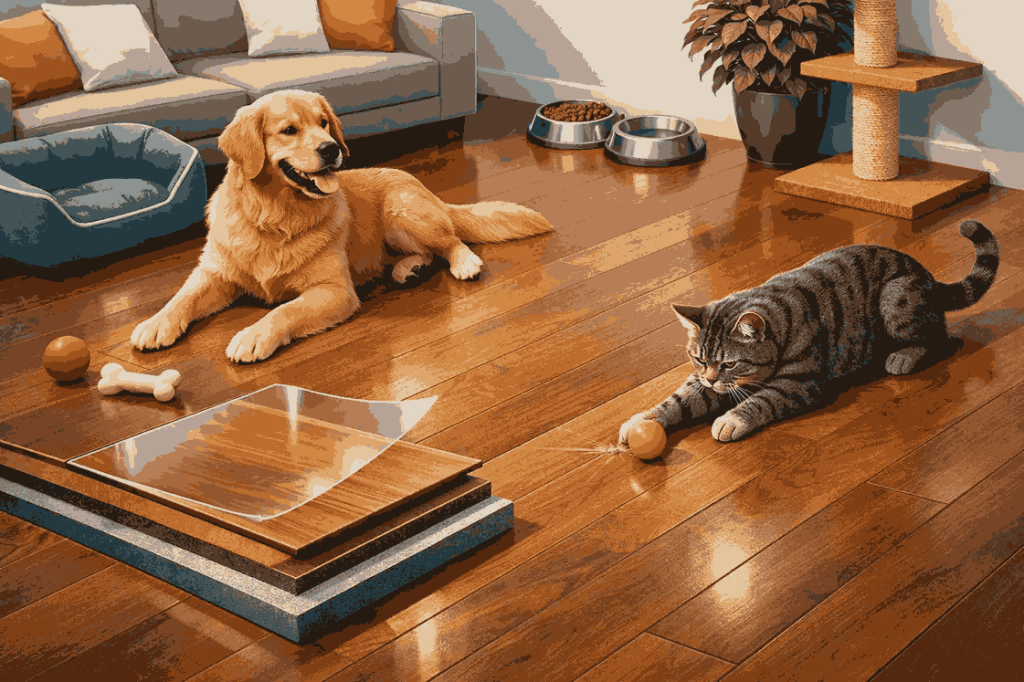
A dog racing to the door, a cat launching off the sofa, a dropped water bowl near the kitchen – these are everyday wear tests that quickly reveal whether a floor is built for real life. Scratch resistant flooring for pets should do more than look good in a showroom. It needs a durable surface, a stable construction, reliable water resistance, and a finish that still suits the character of the space.
For homeowners, the right choice means less worry over routine marks and easier cleanup. For contractors, designers, retailers, and project teams, it means specifying a floor that can maintain its appearance across busy residential units, rental properties, hospitality spaces, and family-focused developments.
What Scratch Resistance Really Means
No flooring is completely immune to damage. A sharp object dragged with force, accumulated grit under a chair leg, or an untrimmed large dog’s nails can mark nearly any decorative surface. The practical goal is a floor that resists the fine scratching, scuffing, and wear caused by normal pet activity, while making any minor marks less visible.
Surface performance depends on more than a product label. A quality vinyl click or SPC floor combines a protective coating with a durable wear layer over the decorative film. This layered construction helps defend the visual surface against daily abrasion without sacrificing the wood or stone look that buyers want.
Finish also matters. High-gloss floors can make light scratches and paw prints more noticeable, even when their protective layer is sound. Matte, low-sheen, and naturally textured designs often perform better visually in pet households because they diffuse light and disguise small surface marks. A realistic embossed texture can add another practical benefit: improved underfoot grip for pets moving through the home.
Why SPC Flooring Works Well in Pet-Friendly Spaces
SPC flooring uses a rigid stone plastic composite core, paired with a protective top surface and click-lock installation system. Its construction is well suited to households where paws, claws, spills, toys, and frequent cleaning are part of the routine.
The rigid core provides dimensional stability and creates a solid feel underfoot. Unlike natural timber, it does not require refinishing after surface wear. Unlike many carpet installations, it does not trap pet hair, odors, or stains deep within fibers. A simple sweep or vacuum followed by a damp mop is generally enough for regular maintenance.
Water resistance is equally relevant. Pet accidents, water bowls, wet paws, and rainy-day entryways place pressure on floor joints as well as surface finishes. SPC flooring is water-resistant by construction, but correct installation remains essential. The subfloor should be clean, level, and dry, while perimeter expansion requirements and manufacturer instructions must be followed. Water should still be cleaned promptly rather than left standing at edges or transitions.
For projects that require fast installation and practical maintenance, click flooring can reduce downtime. Advanced click-lock systems help create secure plank connections without adhesive across many applications. Installation quality remains a major factor in long-term performance, particularly in large open areas, multi-unit projects, and spaces with heavy furniture.
How to Choose Scratch Resistant Flooring for Pets
A pet-friendly floor should be specified as a complete system, not selected by color alone. Before approving a product, assess the wear layer, coating, texture, core construction, installation method, and intended traffic level.
Start With the Wear Layer and Protective Coating
The wear layer is the clear protective layer above the printed design. In general, a thicker wear layer is better suited to demanding use, but thickness alone does not define quality. The coating technology, production consistency, and surface treatment all influence how the floor responds to scuffing and repeated cleaning.
For an active household or a commercial setting where pets may be present, request clear product specifications rather than relying on broad claims such as “pet-proof.” A supplier should be able to explain the product’s wear-layer construction, abrasion performance, recommended use, cleaning guidance, and warranty terms.
For distributors and OEM buyers, batch consistency deserves the same attention. Color, texture, locking profile, and surface protection should remain dependable from one production run to the next. This is particularly valuable when supplying phased developments or maintaining stock for repeat orders.
Choose a Low-Sheen, Textured Design
A pale oak, greige wood grain, mid-tone rustic plank, or lightly textured stone look can be more forgiving than a deep high-gloss finish. The best visual choice depends on the interior, but moderate tones and natural variation generally conceal everyday dust, pet hair, and light marks more effectively.
Avoid choosing solely based on the darkest or lightest sample. Very dark floors can show lint and pale scratches, while very light uniform floors may highlight dirt around entrances. A balanced color with grain movement offers a more practical result while still supporting a refined, contemporary interior.
Consider Traction and Acoustics
Scratch resistance should not come at the expense of pet comfort. Smooth, shiny floors may be harder for older dogs or energetic pets to grip. A textured surface can provide better traction, while a suitable underlayment or integrated backing can help reduce the sound of paws and claws moving across the floor.
Acoustic performance is especially useful in condominiums, apartments, upper-floor rooms, and multi-family projects. However, do not add an underlayment without confirming that it is approved for the flooring system. An unsuitable underlayment can compromise click-lock stability or affect warranty coverage.
Match the Product to the Room
A quiet guest room with one small pet has different needs from a busy kitchen connecting to a backyard. Entryways, feeding areas, hallways, and living rooms usually experience the highest concentration of moisture, grit, and claw traffic. These areas benefit from a durable SPC construction, a practical color, and proper mats at exterior doors.
In commercial work, consider how the floor will be cleaned, how often it will be exposed to rolling loads, and whether the space permits animals. A pet-friendly apartment community, veterinary reception area, or hospitality property may require a more demanding specification than a standard residential bedroom.
Installation Details That Protect the Finish
Even a high-quality floor can underperform when installation conditions are ignored. Grit trapped beneath a loose plank, an uneven subfloor, or poorly fitted transitions can create movement and stress at the joints. A stable, properly prepared substrate is part of scratch and wear management because it keeps the finished floor supported under everyday traffic.
Use protective pads beneath furniture legs, especially chairs that slide frequently. At exterior entries, use mats that trap grit before it reaches the floor. Small stones are often more damaging than pet claws because they act like abrasive particles under shoes, paws, chair legs, and toys.
For large projects, installers should follow the manufacturer’s requirements for expansion gaps, room dimensions, transitions, and heavy fixed cabinetry. Click flooring is designed for efficient installation, but precision at the start prevents avoidable problems later.
Daily Care for Homes With Pets
Pet-friendly maintenance is straightforward when it is consistent. Sweep, vacuum with a hard-floor setting, or use a soft brush attachment to remove grit before it is ground into the surface. Wipe spills promptly with a damp microfiber mop and a flooring cleaner approved for vinyl or SPC surfaces.
Avoid steam mops, abrasive scrub pads, waxes, and harsh solvent-based cleaners unless the flooring manufacturer specifically approves them. These products can dull the protective coating, leave residue, or create unnecessary maintenance issues. Trim pets’ nails regularly, not because the floor is fragile, but because shorter nails reduce concentrated pressure and help pets move more comfortably.
A responsible flooring supplier should provide clear cleaning recommendations, product documentation, and practical support before and after installation. For buyers sourcing at scale, dependable technical communication is as valuable as the plank itself.
A Better Standard for Pet-Friendly Floors
The strongest pet-friendly flooring decisions balance engineering performance with visual restraint. A durable wear surface, rigid water-resistant core, secure click system, low-sheen design, and professional installation create a floor that is ready for real use rather than occasional use.
PLUZ SPC manufactures SPC and luxury vinyl click flooring with 100% virgin materials and precision-controlled production, helping project teams and homeowners specify durable surfaces with consistent quality and design flexibility.
Choose the floor that fits the way the space will actually be lived in. When pets are part of the household, a practical finish and a well-made floor will keep the room looking considered long after the first excited run across it.