

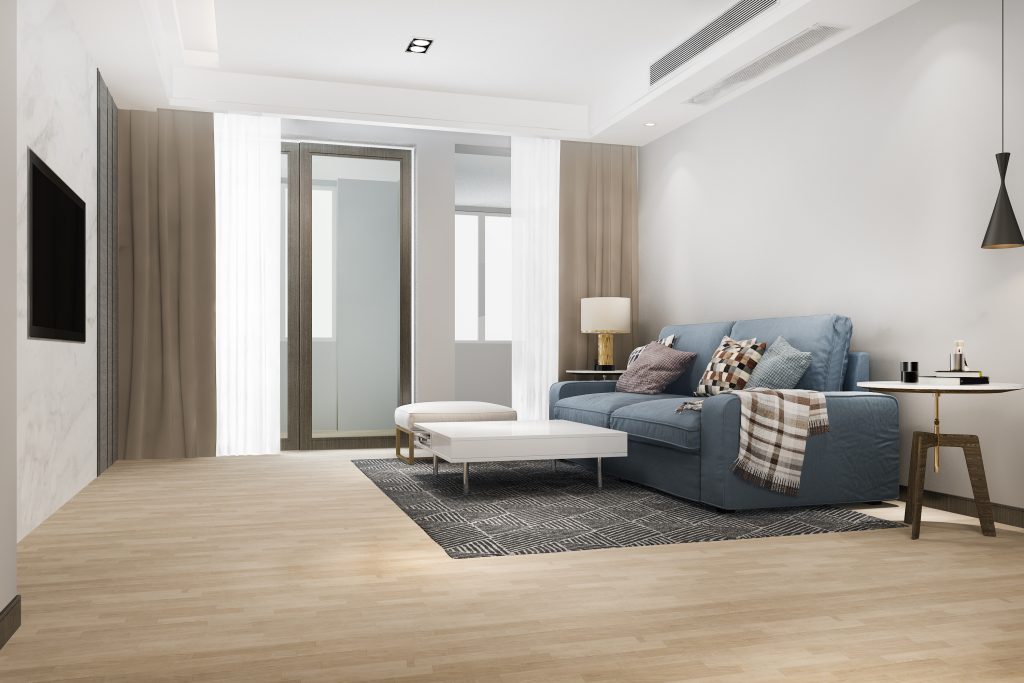
A wet umbrella by the entry, a child’s spilled drink, or a bathroom splash should not force a flooring replacement. So, is SPC flooring waterproof? The short answer is yes: a quality SPC plank has a waterproof core and will not swell, warp, or delaminate when exposed to ordinary surface water. But project teams should distinguish between a waterproof plank and a fully waterproof floor system. Installation details, subfloor conditions, and exposure time still matter.
For contractors, designers, distributors, and homeowners, that distinction leads to better product selection and fewer avoidable site issues.
Is SPC Flooring Waterproof at Its Core?
SPC stands for stone plastic composite. Its rigid core is typically made from calcium carbonate, PVC, and stabilizing materials. Unlike wood-based flooring products, this mineral-polymer core does not absorb moisture in the same way. Water will not make the plank expand like laminate or cause it to cup like natural timber.
A typical SPC floor is built in layers: a protective wear layer, a decorative film that creates the wood or stone appearance, the rigid SPC core, and often an attached underlayment. When manufactured with consistent materials and controlled production standards, these layers create a stable, low-maintenance floor suited to busy interiors.
This makes SPC a strong option for kitchens, dining areas, entrances, retail spaces, hotel rooms, clinics, and residential living areas where daily spills and routine mopping are expected. It also performs well in projects where design teams want a warm timber look without the moisture sensitivity of real wood.
Waterproof Does Not Mean Floodproof
The phrase “waterproof flooring” can create unrealistic expectations. An SPC plank itself can withstand water exposure, but water can still travel through gaps at the perimeter, around pipes, beneath baseboards, or through an inadequately sealed transition. Once moisture is trapped below the floor, the concern shifts from damaged planks to the condition of the subfloor, adhesive residues, underlayment, and surrounding building materials.
For this reason, SPC flooring is not a substitute for waterproofing a wet-area structure. It should not be used to correct a leaking bathroom, an unprotected balcony, rising damp, or a slab with excessive moisture. If a pipe bursts or floodwater enters a space, remove standing water promptly and inspect the subfloor before reinstalling or continuing to use the floor.
The same principle applies in commercial projects. A hotel corridor may benefit from SPC’s resistance to cleaning water and guest spills, but it still requires proper expansion planning and moisture control at the concrete slab. Reliable flooring performance begins before the first plank is clicked into place.
Why SPC Handles Moisture Better Than Many Alternatives
The main advantage of SPC is dimensional stability. A rigid stone-composite core is less likely to react to normal changes in humidity than wood-based flooring. In air-conditioned interiors, occupied commercial spaces, and homes with changing daily conditions, this stability helps the floor retain its fit and finish.
SPC is also practical because it is usually installed as a floating click floor. Advanced click-lock systems help planks connect tightly and allow for efficient installation without wet adhesive across the entire floor. This can reduce installation time, simplify future plank replacement, and support cleaner renovation work.
That said, the click system is designed to lock planks together, not to turn every joint into a permanent water seal. A tight joint limits the path for surface water, but installers should still wipe up spills rather than allowing water to remain on the floor for extended periods. In high-moisture locations, follow the product-specific installation guidance for edge sealing, transitions, and perimeter treatment.
Where Waterproof SPC Flooring Works Best
SPC is a practical choice in spaces exposed to normal household or commercial moisture. Kitchens are an obvious example, especially where food preparation, washing, and frequent cleaning put floors under regular pressure. Entryways and mudrooms also benefit because rainwater, wet shoes, and umbrellas are part of daily use.
For multifamily, hospitality, and office projects, SPC offers another advantage: it can deliver coordinated visual continuity across dry and moisture-prone spaces. A light oak design may run from a living area into a kitchen or from a hotel room into its entry zone without the maintenance demands associated with natural wood.
Bathrooms require a more careful decision. SPC can be suitable for many residential bathroom floors when the room has sound waterproofing below, controlled drainage, and well-executed perimeter details. It is less appropriate for shower floors, rooms that are regularly hosed down, or wet rooms where water is expected to pool. In those applications, tile and a complete waterproofing system are often the more dependable specification.
Subfloor Moisture Is the Real Installation Test
A waterproof plank cannot solve a wet subfloor. Concrete slabs must be tested and prepared according to the flooring specification before installation. Excess moisture vapor, uneven surfaces, cracks, contamination, and failed prior coatings can affect long-term floor performance even when the planks themselves remain intact.
For renovation contractors, this is one of the most valuable checks on site. A floor may look dry on the surface yet carry moisture within the slab. Skipping moisture testing to protect a schedule can lead to odors, mold growth beneath the floor, or movement caused by a deteriorating substrate.
The subfloor must also be level. SPC’s rigid construction gives it strength, but it does not eliminate the need for a properly prepared base. Low spots and high points can place stress on click joints, create movement underfoot, and make the finished floor look uneven in direct light.
Before installation, allow the flooring to acclimate as required by the manufacturer, confirm the room conditions are stable, and leave the specified expansion space at walls and fixed objects. These basic controls protect both the appearance of the project and the integrity of the locking system.
How to Keep SPC Flooring Looking Its Best
Waterproof performance is most useful when maintenance stays simple. Sweep or vacuum regularly using a hard-floor setting to remove grit that can wear the surface over time. For routine cleaning, use a damp microfiber mop and a manufacturer-approved neutral cleaner. The goal is a clean floor, not a saturated one.
Avoid flooding the surface with water, using steam equipment unless it is specifically approved, or applying waxes and harsh solvents. These methods may leave residue, affect the protective surface, or allow unnecessary moisture to sit at joints and edges.
At entrances, walk-off mats reduce tracked-in water and abrasive sand. Felt pads under furniture help protect the finish, while prompt attention to spills keeps the surface clean and safe. For retail and hospitality environments, a defined cleaning routine also helps maintain a consistent appearance across high-traffic zones.
What to Confirm Before You Specify SPC
Not all SPC flooring is manufactured to the same standard. For a residential renovation or a multi-unit project, look beyond the word “waterproof” on a brochure. Confirm the wear-layer thickness, total plank thickness, click-lock profile, backing construction, dimensional tolerance, and warranty terms. These details influence how the floor handles traffic, installation demands, and long-term maintenance.
Batch consistency matters as well. Designers and project coordinators need color, texture, and plank dimensions that remain consistent from sampling through delivery. For phased projects, dependable production and clear communication can be as important as the flooring specification itself.
PLUZ SPC uses 100% virgin, recyclable materials and precision click-lock technology to support stable installation and dependable everyday performance. For professionals managing larger projects, selecting a supply partner with manufacturing control and responsive technical support helps reduce uncertainty before materials reach the site.
A waterproof SPC floor gives occupants freedom to live and work without treating every spill as an emergency. Specify it with the same care you would give any finish material – on a dry, level subfloor, with correct installation details and a design suited to how the space is actually used.