

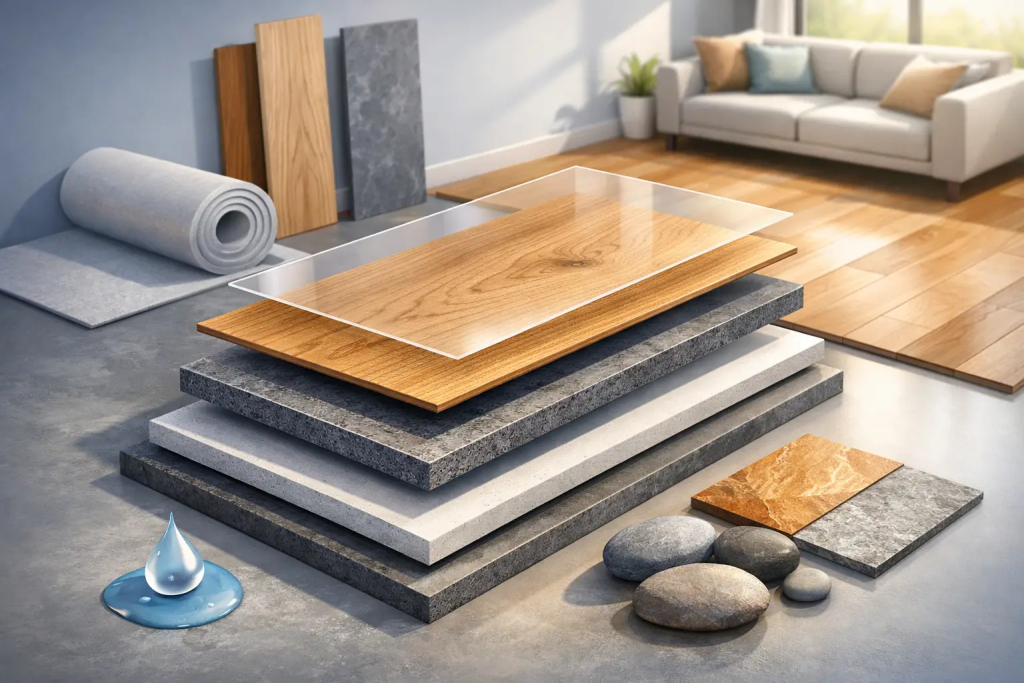
A floor can look like natural oak, stone, or concrete and still be designed for the realities of busy homes and commercial spaces: spills, rolling furniture, changing temperatures, tight installation schedules, and daily foot traffic. So, what is stone plastic composite flooring? Often called SPC flooring, it is a rigid-core vinyl flooring made with a mineral-and-polymer core, a realistic decorative layer, and protective surface layers engineered for stable, low-maintenance performance.
For project teams, the appeal is not only visual. SPC combines wood-inspired design with practical resistance to water, scratches, termites, and everyday wear. For homeowners, it offers an attractive click-flooring option that can be easier to maintain than many natural materials. The right product still depends on the project, the subfloor, traffic level, and installation conditions.
What Is Stone Plastic Composite Flooring Made Of?
Stone plastic composite flooring is a multilayer flooring plank or tile with a dense, rigid central core. The core is typically produced from calcium carbonate, PVC, and stabilizers. This construction gives SPC its dimensional stability and solid feel compared with softer, more flexible vinyl flooring.
Although specifications vary by manufacturer and collection, a quality SPC plank commonly includes four main functional layers:
- A UV coating helps protect the finish from staining and routine cleaning.
- A transparent wear layer provides resistance against scuffs, scratches, and surface abrasion.
- A decorative film creates the wood, stone, or contemporary visual design.
- The SPC core delivers rigidity, stability, and water resistance. Some products also include an attached acoustic underlayment to reduce footfall sound.
Each layer has a specific job. A beautiful print layer alone does not make a commercial-grade floor. Long-term performance depends on core consistency, wear-layer thickness, surface treatment, click-lock precision, and disciplined manufacturing control across production batches.
Why SPC Flooring Performs Differently
SPC is part of the broader luxury vinyl flooring category, but its rigid core changes how the floor handles everyday conditions. The mineral content creates a dense structure that is less likely to expand and contract than many conventional flooring materials. This can be useful in spaces with air-conditioning cycles, high humidity, or moderate temperature changes.
The planks are also waterproof at the material level. A spilled drink, wet shoes, or routine mopping will not cause the SPC core to swell like untreated wood-based flooring. That makes SPC a practical choice for kitchens, dining areas, corridors, retail spaces, offices, and many residential living areas.
Water-resistant construction does not mean the entire installation is immune to moisture problems. Standing water can still enter at wall edges or penetrate an unsuitable subfloor. Persistent moisture below the floor may also lead to adhesive, underlayment, or subfloor issues, depending on the installation method. Moisture testing and proper site preparation remain essential, especially for ground-floor and commercial projects.
SPC also has a naturally firm feel underfoot. That firmness supports dent resistance and a stable walking surface, but it can feel less cushioned than softer vinyl or carpet. An integrated IXPE or EVA underlayment can improve acoustics and comfort, although it should never be used to hide a poor subfloor.
How Click-Lock SPC Flooring Is Installed
Most SPC products are floating floors. Rather than being glued across the full surface, the planks connect through engineered click-lock joints and rest over a prepared subfloor. This installation format can reduce project time and keep renovation sites cleaner than some wet-installation systems.
Precision in the locking profile matters. A well-manufactured click system brings planks together securely, helps maintain tight joints, and supports efficient installation by trained crews. Systems such as Välinge 2G and 5G are designed to simplify plank connection, but installers must still follow the approved method for the specific profile. Forcing an incorrect joint can damage the lock and compromise the finished floor.
A floating installation requires a clean, dry, level, and structurally sound subfloor. Minor imperfections can telegraph through rigid planks or create movement at the joints. Contractors should inspect flatness requirements before installation, address cracks and high spots, and allow appropriate expansion space around walls, columns, fixed cabinetry, and other obstructions.
Doorways, large floor areas, direct sunlight, and transitions to other materials deserve additional planning. In some layouts, expansion breaks or transition profiles are necessary. The product’s installation instructions should always govern the final approach, particularly for warranty-sensitive projects.
Where Stone Plastic Composite Flooring Works Best
SPC flooring suits a wide range of interiors because it balances durable construction with design flexibility. Wood-grain planks can create warmth in apartments, show units, hotel rooms, and workplaces. Stone and concrete visuals can support clean, modern retail, hospitality, and residential concepts without the weight or cold surface feel of natural tile.
It is especially useful where teams need coordinated design and practical upkeep. A healthcare waiting area, for example, may need a surface that is easy to clean and capable of handling frequent foot traffic. A rental property may prioritize quick replacement capability, water resistance, and a finish that appeals to a broad range of tenants. An office renovation may need fast installation with minimal disruption to the existing space.
SPC is not automatically the best choice everywhere. Areas exposed to prolonged direct sun through unshaded glazing may require careful product selection and window treatments. Heavy commercial environments with frequent wheeled loads, such as warehouses or industrial facilities, may call for a different flooring system. Bathrooms and wet rooms need special attention to edge sealing, drainage, and local building requirements. Matching the floor to actual use is more reliable than choosing based on appearance alone.
How to Evaluate SPC Flooring Quality
Two SPC planks can look similar in a showroom while offering very different performance on site. Procurement teams and homeowners should assess the full product specification rather than relying only on color or plank thickness.
Start with the wear layer. This transparent top layer has a direct effect on scratch and abrasion resistance. A heavier wear layer is generally better suited to higher-traffic environments, but surface coating quality also matters. Look for a finish designed to resist stains and simplify regular cleaning.
Next, consider core quality and material consistency. A core made from 100% virgin materials can support more controlled production quality than one with an unknown recycled-content mix. The goal is not simply a rigid plank. It is a stable plank with consistent dimensions, dependable click joints, and reliable visual quality from one batch to the next.
Attached underlayment is another practical consideration. It can reduce installation steps and improve sound control, especially in multi-unit residences and offices. However, acoustic ratings should be evaluated in the context of the full floor assembly. Building management rules, slab construction, and ceiling systems all affect actual noise performance.
Finally, confirm the commercial support behind the product. For distributors, contractors, and developers, reliable supply, matching batch availability, clear installation guidance, and responsive warranty support can matter as much as the technical data sheet. A floor is installed once, but its performance is judged for years.
Care and Maintenance for SPC Floors
Routine care is straightforward. Remove dust and grit with a soft broom, vacuum suitable for hard floors, or dry mop. Clean spills promptly, then use a damp mop and a manufacturer-approved neutral cleaner when needed. Avoid steam cleaners unless the specific product instructions allow them, as heat and moisture can affect joints or surrounding installation components.
Entrance mats help reduce the abrasive grit that causes many surface scratches. Felt pads under furniture, protective cups beneath heavy legs, and care when moving appliances will also preserve the finish. Do not drag sharp or heavy objects directly across the floor.
For commercial sites, a maintenance plan should match traffic patterns. High-use entry zones may need more frequent cleaning, while retail fixtures and movable furniture should be checked regularly for damage points. Simple preventive care protects both the appearance of the floor and the value of the project.
A Material Choice That Needs the Right Partner
Stone plastic composite flooring is not just a visual alternative to wood or tile. It is an engineered floor system that can bring stability, water resistance, efficient click installation, and refined design into the same specification. At PLUZ SPC, precision manufacturing, virgin-material construction, and dependable click-lock performance are intended to give project teams and homeowners confidence from sample selection through installation.
The best results begin before the first plank is opened. Choose a design that fits the space, verify the performance specification against real site conditions, and make subfloor preparation part of the flooring decision. That is how an attractive SPC floor becomes a dependable surface for everyday life.