

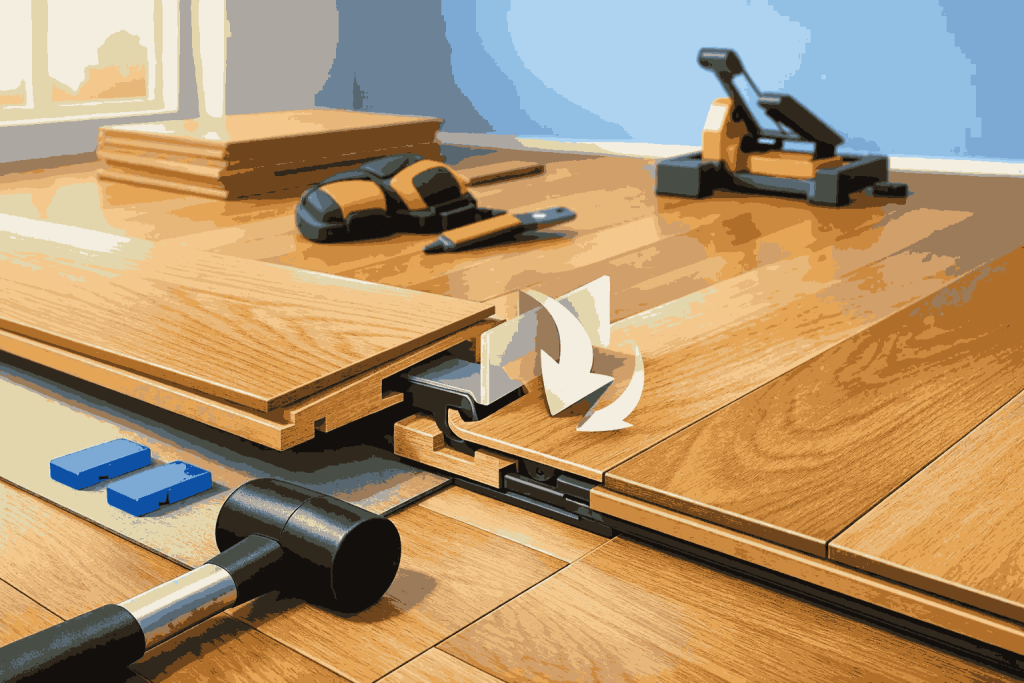
A flooring schedule can look straightforward until installation begins. Planks that do not align consistently, weak end joints, or slow fitting methods can add labor hours and create avoidable handover delays. Valinge 5G click lock flooring is designed to address this practical part of the job: creating a secure mechanical connection between planks with a faster, more installer-friendly fitting process.
For contractors, distributors, designers, and homeowners, the lock system is not a minor product detail. It affects installation speed, finished-floor appearance, repair planning, and confidence in the floor over years of daily use. The right click system must work alongside a stable SPC core, accurate plank dimensions, and disciplined manufacturing quality.
What Valinge 5G Click Lock Flooring Does
Välinge 5G is a mechanical click-lock technology used in many modern floating-floor constructions. While exact locking details vary by plank design and product specification, the system is commonly associated with a fold-down connection and a vertical locking action at the short end of the plank. As a plank is lowered into position, the end joint locks without requiring a separate adhesive application.
This changes the installation sequence. Rather than spending time managing glue, waiting for cure times, or forcing joints into place, installers can work through a controlled click-and-lock process. A properly manufactured system should produce joints that sit close and level, helping the completed floor maintain a clean, continuous wood-look surface.
The advantage is especially relevant for SPC flooring. SPC planks have a rigid mineral-based core that supports dimensional stability and everyday durability. Pairing that core with an engineered click system gives project teams a floor that is practical to install and appropriate for demanding residential or commercial interiors.
Why the Locking System Matters on Real Projects
A floor is only as dependable as its materials and its installation. Even an attractive plank can disappoint if inconsistent machining causes visible gaps, uneven joints, or excessive installation time. For project managers, these issues affect labor planning and can hold up follow-on trades such as cabinetry, painting, furniture installation, and final cleaning.
Faster installation without wet adhesives
Click flooring is installed as a floating floor, so there is generally no need to spread adhesive across the subfloor for the plank connection itself. This reduces mess on site and supports a cleaner installation workflow. It can also make the product suitable for occupied renovations where teams need to minimize disruption.
Faster fitting does not mean skipping preparation. The subfloor still needs to be clean, dry, sound, and sufficiently level for the product specification. A premium locking profile cannot correct a severely uneven substrate. When a plank is forced to bridge a dip or ridge, stress transfers into the joints and may affect the floor’s long-term appearance.
A more controlled finished appearance
The short-end connection is often where installers lose time or see gaps develop when a floor is poorly fitted. A well-designed 5G mechanism helps create a positive connection as each row is completed. This supports consistent spacing between planks and a more refined result across open living spaces, retail floors, hotel rooms, and office interiors.
That said, the lock should never be judged by a single sample plank. Professional buyers should assess how planks connect across multiple cartons, especially for larger projects. Consistent profile cutting, plank thickness, and core quality are what allow the system to perform repeatedly from the first box to the final row.
Practical replacement and maintenance planning
Floating click flooring offers an operational benefit after installation: individual boards can often be accessed through a planned disassembly process when repair work is required. The exact method depends on the room layout, location of the damaged plank, and installed product. It is not always a quick spot repair, particularly when the affected board sits in the middle of a large room, but it can be more manageable than replacing permanently bonded flooring.
For hospitality, retail, and rental properties, this matters. Keeping approved spare planks from the same production batch gives facility teams a better chance of matching the original color and grain pattern if a future replacement is needed.
The System Works Best with Accurate Manufacturing
Click-lock performance is closely tied to manufacturing discipline. The locking profile is engineered to tight tolerances. If a profile is cut inconsistently, planks may feel too tight, too loose, difficult to close, or vulnerable to joint separation. This is why buyers should look beyond the phrase “5G click lock” and ask how the finished flooring is controlled from raw material to packing.
PLUZ SPC applies precision manufacturing experience to SPC and luxury vinyl click flooring made with 100% virgin, recyclable materials. For distributors and project buyers, consistent batch quality is not simply a factory claim. It supports more predictable installation, better color continuity, and fewer disruptions when orders must meet a fixed project schedule.
The quality of the core also matters. A stable SPC construction helps the plank resist the movement that can affect flooring in spaces with changing temperatures, active foot traffic, or routine cleaning. Water resistance, scratch resistance, sound-reducing performance, fire resistance, and termite resistance should be considered as part of the complete flooring specification, not as isolated selling points.
Where 5G Click Flooring Fits Best
Valinge 5G click lock flooring can suit a broad range of interiors, but selection should begin with the use of the space. In homes, it offers a wood-inspired finish with straightforward maintenance and a practical installation method for renovation work. In commercial settings, it can support efficient room-by-room installation and help keep project timelines moving.
It is particularly useful where installers need to work cleanly and efficiently, such as apartments, offices, retail units, hospitality rooms, show galleries, and occupied renovation sites. Design teams can then select a finish that supports the interior concept, from calm Nordic tones and minimal contemporary palettes to warmer rustic or vintage-inspired surfaces.
However, no single flooring construction suits every environment. Areas exposed to standing water, extreme heat, direct sunlight through large unshaded glazing, or unusually heavy rolling loads require careful specification. Expansion gaps, transition profiles, surface protection, and installation conditions must follow the product’s technical guidance. For commercial projects, confirm the intended traffic level, furniture loads, cleaning regime, and warranty requirements before purchase.
Installation Details That Protect the Lock
The fastest installations are usually the best prepared. Acclimatization requirements depend on the product and site conditions, but cartons should be stored and handled according to the manufacturer’s instructions. Installers should inspect planks before fitting, mix boards from several cartons where variation is desired, and check that the first rows are straight before continuing across the room.
A suitable underlayment may be required depending on the selected SPC product and subfloor condition. Some planks include an attached backing, while others are specified with a separate underlayment. Adding an unsuitable extra layer can create too much movement beneath the floor and place unnecessary pressure on the locking joints.
Keep the work area free of grit. Small pieces of debris caught in a locking profile can prevent full engagement and create an apparent joint issue that is not caused by the plank itself. Installers should use the recommended tools, avoid striking profiles aggressively, and replace any visibly damaged boards rather than attempting to force them into the layout.
For procurement teams, it is sensible to order an appropriate allowance for cuts, layout direction, and future repairs. The percentage varies with room shape and installation pattern. Straight rooms typically require less allowance than projects with angled walls, many doorways, feature insets, or complex built-in elements.
Choosing a Supplier Beyond the Click Profile
A named lock system is valuable, but dependable flooring supply requires more than one technical feature. Ask whether the supplier can maintain available inventory or production continuity, provide clear installation information, support sample approval, and communicate quickly when a project schedule changes.
For OEM, distribution, and multi-site projects, batch consistency deserves special attention. Confirm the approved décor, plank dimensions, surface texture, wear-layer requirement, packaging format, and delivery plan before production is released. These details reduce surprises when flooring arrives at several locations or is installed in phases.
Design should also be evaluated under the actual project lighting. A plank that looks balanced in a sample board may read warmer, cooler, lighter, or more textured across a full room. Reviewing larger samples and laying out several boards before final approval helps designers and clients make confident choices.
A reliable click floor should make the installer’s work easier without asking the project team to compromise on design or durability. Specify the lock system, core construction, finish, and support standard together, then give the installation crew the prepared subfloor and clear information they need to deliver a floor that looks right from the first room to the final handover.