

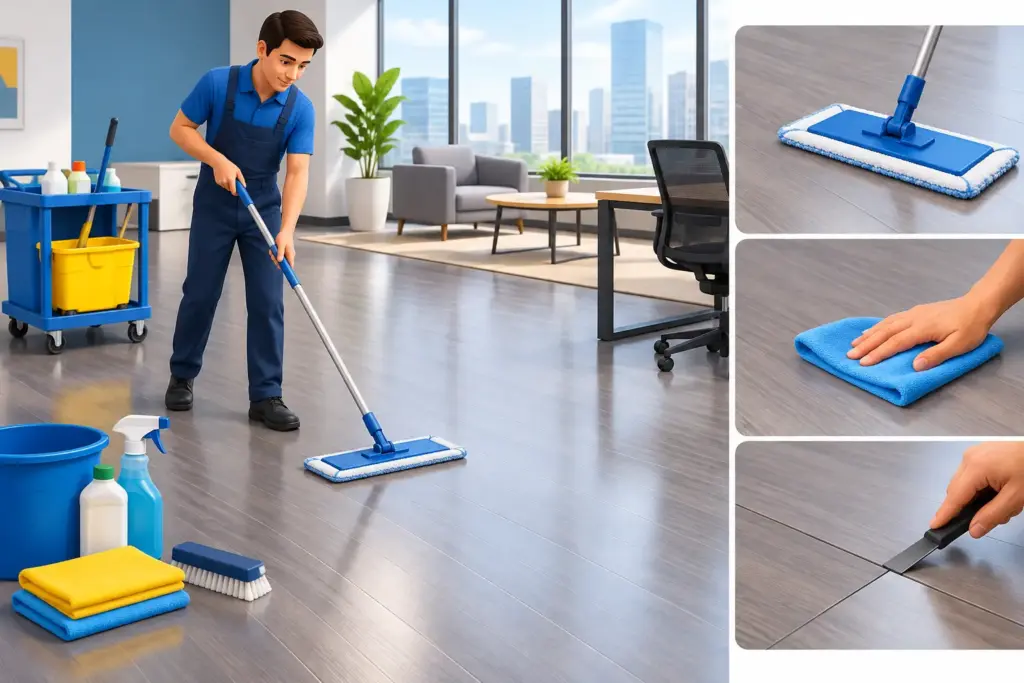
A commercial floor rarely fails because nobody cleaned it. It fails because the wrong cleaner leaves residue, grit is allowed to act like sandpaper, or moisture sits at edges and seams longer than it should. Knowing how to maintain commercial vinyl flooring helps facility teams protect appearance, safety, and replacement budgets without turning daily care into a complicated process.
Commercial vinyl flooring is designed for busy settings, from retail stores and offices to hospitality, healthcare, and multifamily common areas. However, performance still depends on matching the maintenance routine to the traffic level, the floor construction, and the conditions of the space. A well-specified SPC or luxury vinyl click floor can be highly water-resistant and scratch-resistant, but it is not maintenance-free.
Start With the Floor’s Actual Use
The right cleaning schedule is determined by foot traffic, soil load, and what enters the building. A reception area beside a rainy parking lot needs more attention than a low-traffic conference room. A restaurant entry, retail aisle, or hotel corridor may need spot cleaning throughout the day, while a private office may only require regular dry debris removal and periodic damp cleaning.
Before setting a schedule, walk the space at opening, mid-day, and closing. Look for sand, road salt, food spills, rolling loads, standing water, and scuff marks. This simple observation prevents two common mistakes: under-cleaning areas that wear quickly and over-cleaning areas with chemicals they do not need.
For most commercial sites, dry debris removal should happen daily, with higher-traffic entrances and aisles checked more often. Damp mopping can be scheduled daily or several times per week depending on conditions. Deep cleaning is not a fixed calendar event. It should be performed when normal cleaning no longer restores the floor’s intended appearance.
Keep Grit Off the Surface
Fine grit is one of the most damaging contaminants on a vinyl floor. Small particles become trapped under shoes, carts, and furniture feet, gradually dulling the surface with repeated abrasion. This is especially relevant in commercial lobbies, storefronts, and project spaces that receive construction dust during fit-out.
Use properly sized walk-off mats at every exterior entrance and keep them clean. A mat that is saturated with dirt simply relocates soil onto the floor. Where weather conditions are severe, consider a two-stage approach with an exterior scraper mat followed by an interior absorbent mat.
Sweep, dust mop, or vacuum using a hard-floor setting. Avoid vacuum attachments with aggressive rotating brush bars unless the equipment manufacturer confirms they are suitable for vinyl. The goal is to lift debris without grinding it into the wear layer.
Protect high-contact zones
Place protective pads under furniture legs, display fixtures, and movable seating. Inspect them regularly because worn pads can collect grit or become uneven. For chairs on wheels, use casters rated for resilient flooring and consider chair mats in workstations with constant movement.
Heavy equipment, pallet jacks, and rolling racks require a separate review. Vinyl click flooring performs well in many commercial settings, but point loads and rolling loads must remain within the product’s stated limits. Do not drag fixtures, appliances, or displays across the surface. Lift them, use suitable moving equipment, or place a protective board along the travel path.
Use Low-Residue Cleaning Methods
Most routine cleaning does not require a strong chemical. Start with dry removal, then use a damp microfiber mop with clean water or a pH-neutral cleaner formulated for vinyl or resilient flooring. Follow the dilution instructions exactly. More concentrate does not mean a cleaner floor. It often means more residue, which can attract soil and leave the surface looking cloudy.
Change mop water before it becomes visibly dirty. Reapplying dirty water is a frequent cause of streaking in large commercial spaces. Microfiber pads should also be changed or laundered often enough to keep them effective.
For a spill, act quickly. Blot liquids and remove solid debris before cleaning the area with a lightly damp cloth or mop. Food oils, sugary drinks, ink, and grease may require a manufacturer-approved neutral cleaner, but harsh solvents should not be the first response.
Avoid abrasive powders, steel wool, scouring pads, highly alkaline degreasers, and undiluted bleach unless the flooring manufacturer specifically permits their use. These products can damage the finish, change the surface sheen, or leave a residue that makes the floor harder to clean over time.
Be careful with steam and excess water
Water-resistant does not mean that unlimited water exposure is acceptable. Do not flood mop commercial vinyl flooring or leave wet cleaning solution pooled along walls, transitions, and expansion gaps. Wring mops thoroughly and use equipment that leaves the floor only lightly damp.
Steam cleaners should also be approached carefully. High heat can affect some vinyl products, adhesives, or locking systems, particularly when used repeatedly in the same location. Always follow the flooring manufacturer’s maintenance instructions before introducing steam cleaning to a commercial program.
Remove Scuffs Without Damaging the Finish
Black scuffs are common in busy interiors, especially near entrances, elevators, checkout areas, and movable furniture. Address them promptly with a clean microfiber cloth and a manufacturer-approved cleaner. A soft white nylon pad may help with persistent marks, but test any method in an inconspicuous area first.
Do not use aggressive buffing pads simply to make a floor look shinier. Many modern luxury vinyl and SPC floors are designed with a factory-applied finish that does not require waxing. Applying polish or wax to a no-wax surface can create patchy sheen, trap dirt, and complicate future maintenance.
If a project requires a specific appearance standard, define it early. A realistic maintenance plan should preserve the product’s intended matte, natural wood, stone, or contemporary finish rather than trying to create a high-gloss look the floor was not designed to deliver.
Control Moisture at Edges and Transitions
Commercial vinyl is often chosen for spaces where moisture is a concern, but leaks still need immediate attention. Check plumbing zones, beverage stations, exterior doors, restroom approaches, and window lines after heavy rain. Moisture that reaches the subfloor or remains trapped beneath fixtures can lead to broader site issues even when the flooring surface itself is water-resistant.
Use suitable transition profiles and perimeter details during installation. These areas protect exposed edges and allow the floor system to perform as intended. When a transition becomes loose or damaged, repair it promptly rather than waiting for traffic to catch an exposed edge.
For click flooring, also respect required expansion space. Blocking movement at walls, columns, or fixed cabinetry can create stress in the floor. Maintenance is not only about cleaning. It includes preserving the installation conditions that support long-term stability.
Build a Simple Commercial Vinyl Maintenance Log
A maintenance log gives project managers and facility teams a practical record of what was done, where, and with which products. It is useful for larger properties, warranty administration, and troubleshooting recurring issues. The record does not need to be complicated, but it should identify the cleaning product, dilution ratio, frequency, and any incidents such as leaks, heavy construction traffic, or damage from moving equipment.
Train cleaning teams on the actual floor specification, not a generic vinyl routine. Product type matters. SPC click flooring, glue-down LVT, sheet vinyl, and vinyl composition tile can have different recommendations for moisture, equipment, and finish care. When in doubt, confirm the flooring manufacturer’s guidance before using a new chemical or machine.
When to Call for Professional Support
Routine care can solve most visual issues, but some problems need closer assessment. Call a flooring professional if planks begin to lift, joints separate, edges curl, discoloration appears beneath mats, or repeated cleaning does not remove a film from the surface. Early inspection can identify whether the cause is moisture, installation stress, incompatible cleaners, traffic conditions, or another building-related issue.
For contractors and commercial procurement teams, maintenance should be discussed before handover, not after the first complaint. PLUZ SPC supports project partners with flooring guidance built around durable materials, reliable click-lock performance, and practical long-term care expectations.
The most effective maintenance program is usually the least dramatic one: remove grit early, clean with the right diluted products, control moisture, and respond to small issues before they become visible damage. That consistency keeps commercial vinyl flooring looking considered and performing reliably through daily traffic.