

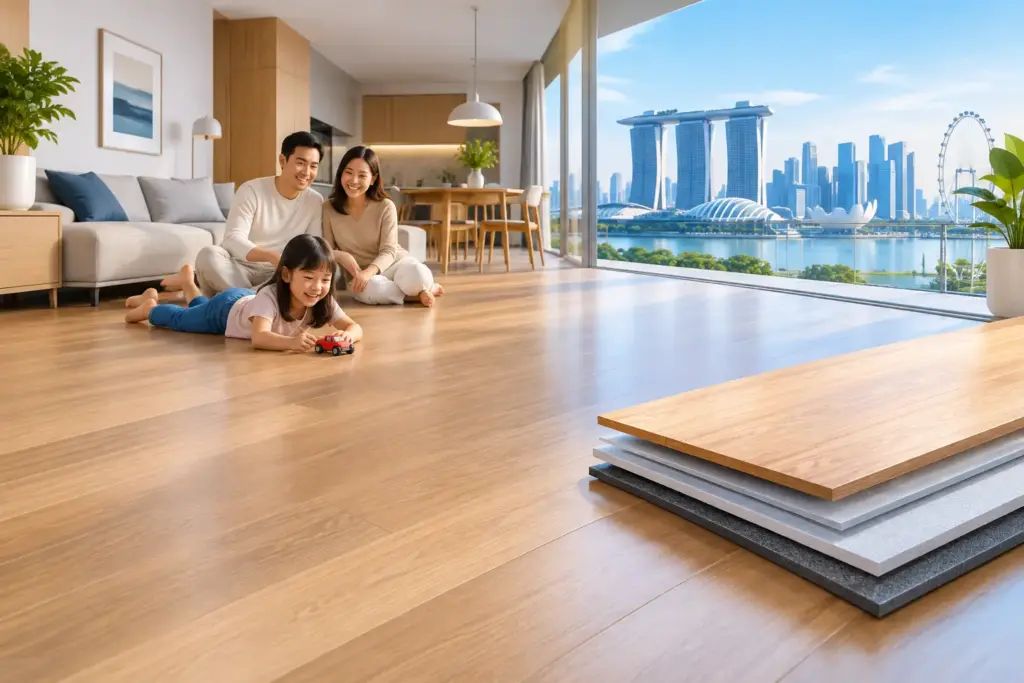
A floor can look impressive on the day a project is handed over and still become a costly problem months later. In high-traffic homes, retail spaces, hospitality interiors, and offices, lasting Singapore flooring results depend on more than choosing an attractive plank. They depend on material consistency, subfloor preparation, installation discipline, and a supply partner that can support the project from sample approval to final delivery.
For contractors, designers, developers, and homeowners, the question is not simply which flooring looks right. It is which flooring will remain stable, practical, and visually consistent under the way the space is actually used.
What Defines Strong Singapore Flooring Results?
Strong results are measurable. The floor sits flat, the joints remain secure, the finish suits the interior, and daily cleaning does not become a maintenance burden. For commercial teams, strong results also mean predictable lead times, consistent batches, and fewer installation delays caused by damaged or mismatched material.
Singapore’s warm, humid climate places additional pressure on interior materials. Entrances may receive moisture from rain, air-conditioned rooms can create changing temperature conditions, and busy spaces experience chair movement, wheeled luggage, foot traffic, and frequent cleaning. A flooring specification should account for all of these factors rather than treating them as afterthoughts.
SPC flooring is often selected because its rigid stone plastic composite core provides dimensional stability and water resistance. However, not every SPC plank is manufactured to the same standard. Core formulation, density, wear layer quality, click profile precision, backing performance, and batch control all affect the finished floor.
The material must perform before it can look good
Design matters, especially in interiors where flooring sets the visual base for furniture, lighting, and wall finishes. A pale oak can make a compact apartment feel more open, while deeper rustic tones can give a hospitality or retail setting more warmth and definition. Yet appearance should be considered alongside construction.
Flooring made with 100% virgin materials offers more predictable quality than material produced with uncontrolled recycled filler. A stable core helps reduce unwanted movement, while a durable surface helps the floor stand up to everyday abrasion. Water resistance is particularly valuable for kitchens, dining areas, entryways, and commercial spaces where spills and wet shoes are part of normal use.
This does not mean a water-resistant floor can be installed without care. Moisture trapped below the flooring, poor perimeter allowances, or an uneven subfloor can still compromise the system. The product and the installation must work together.
Start With the Space, Not the Sample Board
A sample board is useful for narrowing color and texture choices, but it cannot tell the full story of performance. Before finalizing a flooring selection, project teams should assess the room’s traffic pattern, existing subfloor, access conditions, furniture layout, and expected maintenance routine.
A private bedroom and a busy café may both use the same visual style, but their technical requirements are different. Bedrooms may prioritize warmth underfoot and a quiet walking experience. Retail and hospitality projects may place greater emphasis on scratch resistance, easy cleaning, replacement planning, and the ability to source matching material for later phases.
For residential renovations, transitions are another practical consideration. New flooring must meet door clearances, existing tile, cabinetry, and adjacent rooms cleanly. Click flooring can reduce installation complexity compared with many glue-down systems, but installers still need to confirm floor height, expansion spacing, and edge finishing before work begins.
For commercial projects, quantities should include a realistic allowance for cutting, layout direction, and future repairs. Ordering too tightly can create avoidable risk if a later batch varies slightly in shade or embossing. Reliable planning protects both the appearance of the floor and the project schedule.
Subfloor Preparation Is Where Projects Are Won or Lost
Even premium flooring cannot correct a subfloor that is uneven, damp, loose, or contaminated. Minor imperfections may become visible as movement, noise, or stressed locking joints after installation. This is why subfloor assessment should happen before materials arrive on site, not when installers are ready to start.
The surface should be clean, dry, and sufficiently level for the chosen flooring system. Old adhesive residue, loose tiles, cracked screed, and localized high spots all require attention. Where moisture is a concern, the project team should follow the flooring system’s installation requirements and use suitable moisture protection where specified.
Acclimation and site conditions also matter. Flooring should be stored properly and protected from direct weather exposure, excessive heat, and construction damage. Installing before wet trades, painting, ceiling work, or heavy equipment movement are complete can expose finished planks to unnecessary risk.
A disciplined installer will also inspect planks during installation. This is not a sign of weak manufacturing. It is standard professional practice that ensures the final layout meets visual expectations and that any issue is identified before material is locked into place.
Click-Lock Precision Changes the Installation Experience
Click flooring is designed to make installation efficient, but the locking system must be accurately engineered. A weak or inconsistent profile can make planks difficult to engage, create open joints, or result in damaged edges during fitting.
Välinge 2G and 5G click-lock systems are valued because they support secure plank connections and efficient installation workflows. The right system depends on the product format and project needs, but the objective remains the same: a floor that installs cleanly and stays properly joined in service.
For project teams, precision locking contributes to more than speed. It can reduce rework, support cleaner alignment, and help installers maintain a consistent finish across larger areas. Those benefits become more meaningful when the project includes multiple rooms, tight handover dates, or repeated unit layouts.
Installation speed should never be confused with rushing. Proper expansion gaps, staggered joints, carefully planned starting lines, and correctly fitted trims are still essential. The fastest installation is the one that does not need to be redone.
Color Consistency Supports Better Project Outcomes
Flooring is a large visual surface. Small variations can become obvious across an open-plan living area, hotel corridor, showroom, or multi-unit development. That is why consistent manufacturing and controlled batch quality are central to dependable Singapore flooring results.
A clear design direction also prevents expensive late changes. Nordic and minimalist collections tend to support bright, calm interiors with clean lines. Rustic and vintage finishes can bring more character to spaces that need texture and warmth. Contemporary and urban styles often work well where designers want a polished, architectural look without making the room feel cold.
The best choice depends on the lighting, wall colors, furniture palette, and level of visual activity in the room. Highly patterned floors can become a focal point, while quieter wood looks give other finishes more space to stand out. In compact interiors, mid-to-light tones often create a more open impression, though darker planks can be highly effective when paired with sufficient lighting and deliberate contrast.
Samples should be reviewed under the actual lighting conditions of the project whenever possible. Daylight, warm decorative lighting, and cool office lighting can each change how a color is perceived.
Supply Reliability Is Part of Flooring Performance
A floor cannot be completed on time if the required material, accessories, or technical support are unavailable. For developers, retailers, contractors, and OEM buyers, manufacturing reliability is therefore part of the product decision.
A capable supplier should provide clear product information, responsive communication, stable production standards, and realistic delivery commitments. Factory-direct control can be especially valuable for buyers who need repeat orders, custom programs, or dependable batch management. For overseas partners seeking a non-China manufacturing option, direct visibility into production standards and quality processes also supports better purchasing decisions.
PLUZ SPC combines nearly 30 years of precision manufacturing experience with SPC and luxury vinyl click flooring built from virgin, recyclable materials. The focus is practical: consistent production, durable performance, fast coordination, and flooring collections that meet both design and project requirements.
For any project, confirm the available quantity, lead time, required trims, warranty terms, and installation guidance before the purchase order is finalized. These details are not administrative extras. They are what help a specification translate into a finished floor without avoidable surprises.
The Better Result Is the One That Keeps Working
A successful floor should continue to support the space after the installers leave. That means routine cleaning should be straightforward, the surface should remain presentable under normal use, and replacement material should be considered before a future repair becomes urgent.
Regular sweeping or vacuuming, prompt spill cleanup, entrance mats, and furniture protectors can significantly extend the appearance of any finished floor. Avoiding harsh cleaning products and excessive standing water helps protect the surface and edges. In commercial environments, maintenance guidance should be shared with the operations team rather than left in a project folder.
The most reliable flooring decisions are made early, with clear attention to how a space will be used, what the subfloor can support, and whether the supply chain can meet the project’s demands. When those choices are handled with the same care as the interior design, the result is not merely a good-looking handover. It is a floor that continues to earn confidence every day.