

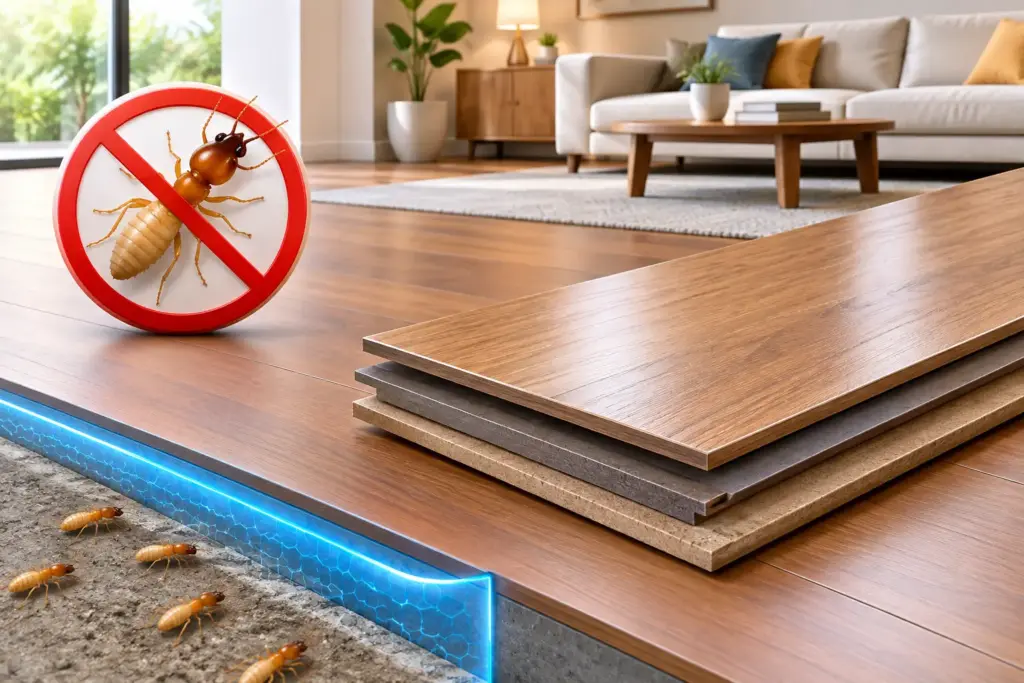
A termite issue can turn a flooring decision into a building-protection decision. Wood flooring and wood-based cores can become vulnerable when moisture, concealed access points, and insect activity meet. Termite resistant flooring planks offer a practical alternative for residential renovations, hospitality spaces, rental properties, and commercial interiors where long-term maintenance and material reliability matter.
For contractors, developers, distributors, and homeowners, the goal is not simply to select a plank labeled termite-resistant. It is to understand what makes the material unappealing to termites, how it performs under real site conditions, and where flooring selection fits within a complete pest-control strategy.
What Makes Flooring Planks Termite Resistant?
Termites consume cellulose, the organic material found in wood and many wood-derived products. Solid hardwood, engineered wood cores, laminate fiberboard, plywood underlayment, and paper-based backing layers may all contain cellulose. A finish coating can improve surface durability, but it does not change the composition beneath it.
SPC flooring takes a different approach. Stone plastic composite planks use a dense core made from mineral content and virgin polymer materials rather than wood fiber. Because that core does not provide a food source for termites, termites cannot consume it in the way they can wood-based flooring products.
This distinction matters on projects in humid regions, ground-floor spaces, and properties with a previous pest history. A termite-resistant floor can reduce one material-related concern, but it should not be described as a cure for an active infestation. Termites may still travel through voids, walls, subfloors, or structural timber. Proper inspection, treatment, drainage, and building maintenance remain essential.
Why SPC Is a Strong Choice for Termite-Resistant Flooring Planks
SPC flooring combines a non-wood core with the everyday benefits expected from modern click flooring. The construction typically includes a wear layer for scratch resistance, a decorative film for wood or stone visuals, a rigid SPC core for stability, and an attached backing on selected products for comfort and sound reduction.
The absence of wood fiber in the core is the primary termite-resistance advantage. It also supports water resistance, an important consideration because persistent moisture can create conditions that contribute to pest activity and damage adjacent building materials. Unlike wood products, SPC planks do not swell, rot, or become a cellulose food source when exposed to ordinary household spills.
For project teams, these performance characteristics can simplify product selection. A floor that is water-resistant, termite-resistant, and designed for daily abrasion addresses several common maintenance concerns with one specification. That does not mean every SPC product is identical. Core density, wear-layer quality, locking precision, backing construction, and manufacturing controls all influence finished performance.
PLUZ SPC manufactures flooring using 100% virgin, recyclable materials and precision click-lock systems to help support consistent plank fit, stable installation, and dependable batch quality.
The click-lock system matters as much as the core
A termite-resistant core is valuable, but an installation still needs to remain tight and stable over time. Poorly formed joints can create visible gaps, allow dirt to collect, and make a floor look unfinished even when the core material itself is durable.
Quality click systems such as Välinge 2G and 5G are engineered to create secure mechanical connections between planks. For installers, this can mean faster assembly and fewer adhesive-related complications. For property owners, a well-fitted floating floor can make future plank replacement more manageable when accidental damage occurs.
Subfloor preparation remains non-negotiable. SPC flooring can bridge minor visual imperfections, but it cannot correct excessive unevenness, active moisture intrusion, or an unstable substrate. A clean, dry, level subfloor protects the locking system and helps the floor deliver the performance it was specified to provide.
Where These Planks Make the Most Sense
Termite-resistant SPC flooring is particularly useful where a wood appearance is desired but wood-related upkeep is not. In single-family homes, it suits living rooms, bedrooms, kitchens, hallways, and finished basements when the installation conditions meet product requirements. For landlords and renovation professionals, its resistance to everyday spills and scratches can be as valuable as its termite-resistant composition.
Commercial applications benefit for different reasons. Retail stores, offices, hospitality rooms, and multifamily common areas need flooring that supports a polished visual standard while standing up to frequent traffic. A rigid plank format can deliver the warm, dimensional look associated with natural timber in Nordic, Rustic, Vintage, Minimalist, Contemporary, or Urban interior schemes without introducing a wood-based core.
For U.S. importers, retailers, and project buyers sourcing internationally, factory consistency should be evaluated alongside the product’s feature list. Request clear product specifications, verify wear-layer options, review locking profiles, and examine samples from the intended production batch where possible. A floor can look convincing in a display board but perform differently if production discipline varies.
Trade-Offs to Consider Before Specifying SPC
No flooring material is right for every project. SPC is rigid and highly stable, but it can feel firmer underfoot than thicker wood or carpet. An attached acoustic pad can improve comfort and reduce transmitted sound, yet it will not replace a professionally designed acoustic system in projects with demanding sound-control requirements.
SPC is also water-resistant, not a substitute for fixing leaks or managing standing water. A plumbing failure, flood event, or wet subfloor should be addressed at the source before any new flooring is installed. Water can affect walls, adhesive residues, underlayment, trim, and the building structure even when the flooring plank itself remains intact.
Temperature conditions also deserve attention. Direct sun through large windows, unconditioned rooms, and rapid temperature shifts can affect any floating-floor installation. Follow the product’s installation instructions for acclimation, expansion gaps, transitions, and approved areas of use. For commercial procurement teams, confirming these details before purchase prevents avoidable site disputes later.
How to Evaluate a Termite-Resistant Flooring Supplier
A product claim should be supported by construction details and accountable manufacturing. Ask whether the core contains wood fiber, whether the materials are virgin or recycled blends, and how quality is monitored from raw material preparation through final packing. Recycled content can have a role in some flooring categories, but quality-sensitive projects should understand how it affects color consistency, density, and performance control.
Also assess how the supplier supports the project after the order is placed. Reliable communication on lead times, batch matching, warranty coverage, installation guidance, and replacement planning matters to installers and procurement teams. For overseas buyers, direct access to the production line and factory documentation can provide greater confidence than broad marketing statements alone.
A capable supplier should be able to discuss the practical limits of its product. Be cautious of claims that a floor is indestructible, fully waterproof under every condition, or sufficient to protect a termite-damaged structure. Clear specifications are more useful than exaggerated promises.
Installation Practices That Protect the Finished Floor
Termite resistance begins with material selection, but jobsite discipline completes the result. Before installation, inspect the substrate and nearby walls for signs of moisture, soft wood, hollow areas, mud tubes, or active insect activity. If there is evidence of termites, arrange professional assessment before covering the area with new flooring.
Keep the installation area dry and follow the required moisture-testing method for the subfloor. Use approved vapor-management materials where the product and substrate call for them. Maintain perimeter expansion space, avoid locking planks tightly against fixed cabinetry or walls, and use proper transition moldings across large openings or changes in room conditions.
After installation, routine care is straightforward. Sweep or vacuum loose grit, clean spills promptly, and use a manufacturer-approved cleaner rather than harsh chemicals or abrasive pads. Protective pads under furniture and entry mats at exterior doors reduce surface wear and keep the design layer looking refined.
The right floor should do more than imitate wood. It should remove avoidable risk while giving the space a finished, intentional look. When termite resistance, core quality, installation precision, and responsible building maintenance work together, SPC planks become a durable foundation for interiors designed to stay attractive through years of real use.