

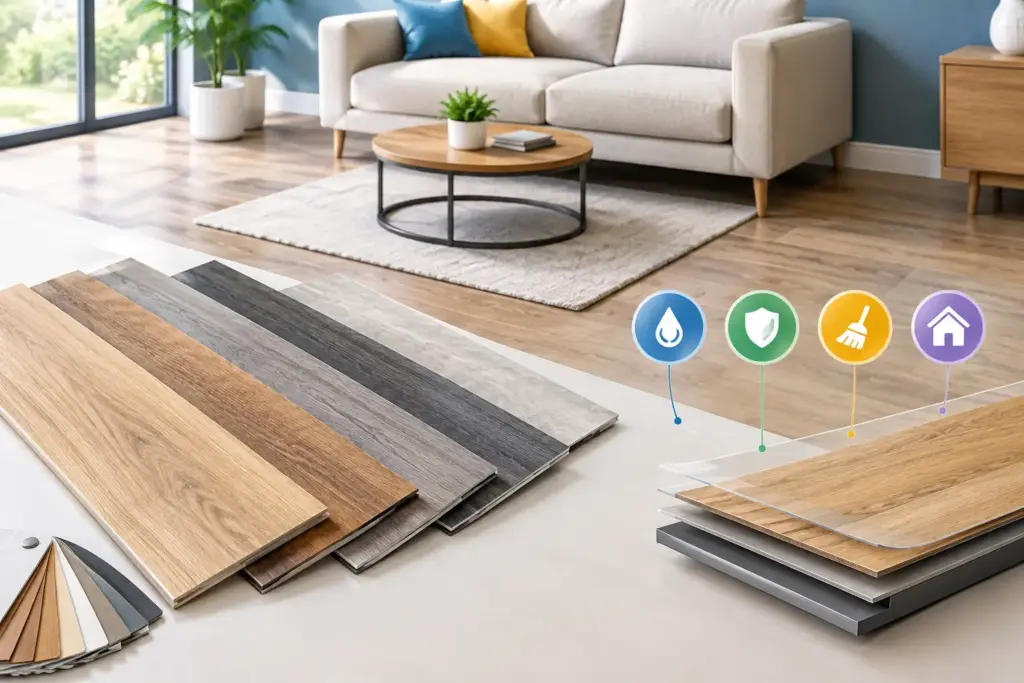
A flooring sample can look convincing under showroom lights, then face a very different test in a busy kitchen, rental unit, hotel corridor, or retail space. The right choice comes down to more than color and grain pattern. This vinyl flooring guide explains how to assess construction, installation conditions, wear requirements, and long-term value before specifying a floor.
For homeowners, the goal may be a quiet, water-resistant floor that keeps daily maintenance simple. For contractors, designers, and procurement teams, the decision also involves batch consistency, lead times, installation efficiency, documentation, and dependable support. A floor that performs well on paper but creates delays on site is not a good project choice.
What Vinyl Flooring Means Today
Vinyl flooring is a broad category that includes luxury vinyl plank (LVP), luxury vinyl tile (LVT), sheet vinyl, and rigid-core click flooring. LVP is typically designed to resemble wood planks, while LVT often recreates stone, concrete, or ceramic tile. Both use printed decorative films protected by a transparent wear layer.
The biggest distinction is often found in the core. Traditional flexible vinyl bends easily and can be a practical option where the subfloor is exceptionally smooth. Rigid-core products, including SPC flooring, use a denser core that provides greater dimensional stability and a more solid feel underfoot. This makes rigid click flooring especially relevant for renovations and commercial interiors where substrate conditions are not always perfect.
SPC stands for stone plastic composite. Its core combines mineral content with polymer materials to create a stable, water-resistant plank. That stability does not mean the floor is indestructible or suitable for every condition. It does mean SPC can be a strong option where temperature variation, daily traffic, and installation speed are serious considerations.
Vinyl Flooring Guide: Start With How the Space Is Used
The best flooring specification begins with the room, not the sample board. Ask what happens in the space each day. A guest bedroom, a family kitchen, a restaurant entrance, and a multifamily corridor may all require a vinyl floor, but their performance priorities are different.
In residential spaces, focus on water exposure, pets, moving furniture, acoustics, and the visual connection between rooms. A matte wood-look plank can soften a modern interior while reducing the visibility of everyday dust and small scratches. In kitchens, laundry rooms, and entryways, a water-resistant surface offers a practical advantage over many natural materials.
For commercial projects, traffic patterns matter more than room labels. Consider rolling loads, frequent cleaning, wheeled luggage, carts, chair movement, and the level of sand or grit carried in from outside. A high-traffic space benefits from a suitable wear layer, stable core construction, and an entrance matting strategy. Even durable flooring will wear prematurely if abrasive dirt is allowed to remain on the surface.
Moisture must also be evaluated honestly. A water-resistant vinyl surface can handle spills and routine cleaning, but persistent moisture below the floor is a separate issue. Test concrete subfloors according to the installation requirements, correct drainage problems, and never use a floating floor to conceal an active moisture condition.
Understand the Layers That Affect Performance
Not all vinyl planks are built to the same standard. Looking beyond the décor layer helps buyers compare products with greater confidence.
The wear layer is the clear top layer that protects the printed design from scratches, scuffs, and daily abrasion. A thicker wear layer generally supports heavier use, but it should be assessed alongside surface treatment, texture, cleaning practices, and the type of traffic expected. A well-managed residential living room and a busy retail aisle are not comparable environments.
Below it, the decorative film establishes the floor’s visual character. Higher-quality printing, synchronized texture, and well-designed plank variation create a more natural result. This is where design decisions become practical ones: overly repetitive patterns can make a large open area look artificial, while balanced variation gives the finished floor more depth.
The core influences stability, impact resistance, and installation behavior. SPC’s dense rigid core is valued for its ability to maintain its shape in demanding settings. A backing layer or attached pad may improve underfoot comfort and help reduce sound transmission, although it does not replace a properly designed acoustic system where strict building requirements apply.
Material quality matters throughout the plank. Flooring made with 100% virgin materials offers a more controlled production basis than products relying heavily on inconsistent recycled feedstock. For trade buyers, this can support more predictable color, dimensions, click performance, and batch-to-batch quality.
Choose a Wear Layer and Surface for the Real Traffic Level
Wear-layer specifications are useful, but they should not be treated as the whole story. A contractor specifying flooring for apartments may prioritize a balance of durability, appearance, and replacement practicality. A hospitality operator may place more weight on cleaning frequency, stain resistance, and the ability to maintain a consistent look across multiple rooms.
Surface texture deserves equal attention. Embossed wood grain and low-gloss finishes can create a refined, authentic appearance. They also help disguise small marks better than a highly reflective surface. On the other hand, a deeply textured finish may require more careful cleaning in spaces exposed to fine debris. Choose the finish based on the maintenance program the property can realistically maintain.
Request samples and inspect them in the actual project lighting. Daylight, warm interior lighting, and cool LED lighting can each change how a gray oak, natural maple, or stone-look design reads. When the project requires a continuous visual flow, review several cartons or samples rather than approving a single plank.
Click-Lock Installation Can Save Time, Not Preparation
Click flooring is designed to create a floating floor without adhesive across the entire installation area. Modern systems such as Välinge 2G and 5G click-lock profiles can support efficient installation and secure plank connections when handled correctly. They are valuable for renovation schedules because they reduce wet trades and can allow a room to return to use sooner.
However, click-lock convenience does not remove the need for site preparation. The subfloor must be clean, dry, and flat within the product’s stated tolerance. High spots can stress joints; low areas can allow movement that eventually damages the locking mechanism. Installers should also check door clearances, cabinetry plans, transitions, perimeter expansion space, and the direction of plank layout before opening cartons.
Acclimation requirements vary by product and jobsite conditions. Follow the manufacturer’s instructions rather than applying a one-size-fits-all rule. Stable indoor temperature and humidity during installation and occupancy are part of protecting the floor’s performance.
For larger commercial areas, it is wise to confirm expansion-break requirements, maximum installation dimensions, and treatment around fixed objects. A floating floor needs room to move naturally. Pinning it under heavy built-ins, tightly fitting trim, or improperly placed fasteners can lead to avoidable problems.
Design Selection Should Support the Project, Not Date It
Vinyl flooring has moved well beyond basic imitation finishes. Wood-look planks can support Nordic, rustic, vintage, minimalist, contemporary, and urban interiors, depending on board width, grain detail, color temperature, and texture. The most successful selections usually relate to the project’s larger material palette instead of trying to become the loudest element in the room.
Light oak and natural tones can make compact residential spaces feel more open. Warm medium browns add comfort to hospitality and living areas. Cooler gray-brown designs can suit restrained contemporary schemes, though extremely gray floors may feel dated faster than balanced neutrals. For commercial projects, select a design with enough visual movement to manage day-to-day marks without appearing overly busy.
Plank size changes perception too. Wide planks can create a calm, expansive look in open-plan interiors, while narrower formats may feel more traditional or better suit smaller, detailed rooms. Before final approval, review the flooring beside wall finishes, casework, fabric, and lighting samples.
Maintenance and Warranty: Protect the Investment
Vinyl flooring is low-maintenance, not no-maintenance. Regular dry sweeping or vacuuming with a hard-floor setting removes grit before it can abrade the wear layer. For routine cleaning, use a lightly damp mop and a cleaner approved for the flooring. Avoid excessive water, abrasive pads, waxes, and harsh solvents that can dull or damage the surface.
Use protective pads under furniture legs, lift rather than drag heavy pieces, and place suitable mats at exterior entrances. Avoid rubber-backed mats unless the flooring manufacturer specifically approves them, since some materials can discolor resilient floors. In commercial settings, a planned cleaning schedule is as important as the initial installation.
Read warranty terms before purchase, particularly for commercial use. Confirm what is covered, how the product must be installed, which cleaning methods are permitted, and whether the warranty applies to the intended traffic level. Keep records of the product batch, installation date, and care instructions. These details are useful if a future repair, extension, or warranty question arises.
For buyers who need factory accountability alongside design flexibility, PLUZ SPC provides rigid-core and luxury vinyl click flooring built for consistent project supply. The best next step is still a practical one: compare the product specification with the site conditions, review physical samples, and involve the installer before the order is finalized. A good floor earns its value quietly, through years of reliable use and a finish that continues to look right in the space.