

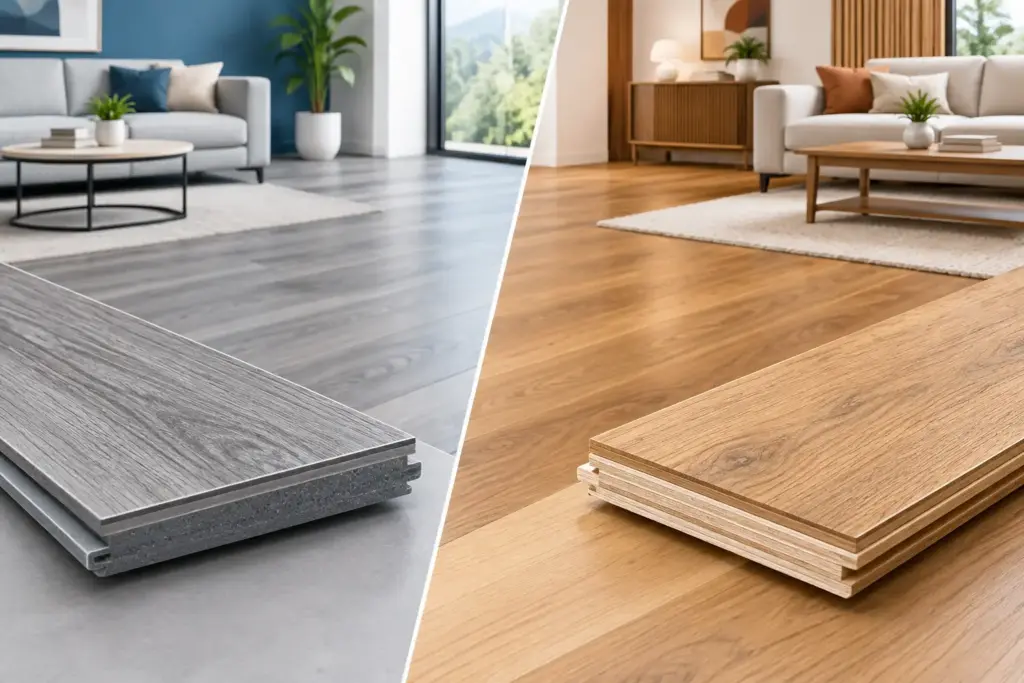
A hotel lobby, a family kitchen, and a high-rise condominium may all call for a wood-look floor, but they do not place the same demands on it. The SPC versus engineered wood decision is less about choosing a universal winner and more about matching the material to moisture exposure, traffic levels, design expectations, installation conditions, and long-term maintenance capacity.
For contractors, designers, developers, and homeowners, the right comparison starts below the surface. Both floors can deliver a refined interior. Their construction, behavior, and appropriate applications are fundamentally different.
SPC Versus Engineered Wood: The Core Difference
SPC flooring is a rigid-core vinyl click floor made with a stone plastic composite core, decorative film, protective wear layer, and backing. Its layered construction is engineered for dimensional stability, water resistance, daily durability, and efficient floating-floor installation. Quality SPC made from 100% virgin materials provides consistent plank performance and a clean, precise finish.
Engineered wood has a real hardwood veneer over layered plywood or other wood-based core material. Because the top surface is genuine timber, each plank carries natural grain variation, texture, and warmth that cannot be perfectly replicated by a printed design layer. It is a wood floor with added structural stability compared with solid hardwood, not a waterproof floor.
That distinction affects nearly every purchasing decision. SPC is generally selected for controlled performance under active use. Engineered wood is selected when the authentic character of real timber is the central design priority and site conditions are suitably stable.
Moisture and Humidity Performance
Moisture is often the deciding factor. SPC is water-resistant by construction and is a practical choice for kitchens, entryways, dining areas, retail spaces, apartments, and other interiors where spills, wet shoes, or routine cleaning are expected. The planks themselves do not absorb water like wood, although a correctly prepared subfloor and properly sealed perimeter details still matter.
Engineered wood tolerates normal indoor living conditions better than solid hardwood in many cases, but its veneer and wood core can still react to prolonged moisture. Spills should be removed promptly. Excess water from wet mopping, plumbing leaks, or uncontrolled humidity may cause cupping, edge lifting, staining, or bond failure.
For projects in humid climates or spaces that transition frequently between air-conditioned and open-air conditions, SPC usually offers greater predictability. That does not mean it belongs in every wet environment. Flooring should never replace sound waterproofing, drainage, or moisture management in bathrooms, balconies, and areas with known slab moisture issues.
Wear Resistance and Everyday Use
SPC is built for practical durability. A quality wear layer helps protect the printed surface from everyday scratches, scuffs, and stains, making it well suited to busy households, rental properties, hospitality rooms, offices, and retail environments. Its dense core also helps resist dents from normal foot traffic and routine furniture use.
Engineered wood can show marks more readily because its surface is real wood. For many design-led residential projects, that is part of its appeal. Natural timber develops a lived-in character over time, especially in matte or textured finishes. But in a reception area with rolling luggage, a pet-friendly home, or a retail store with frequent deliveries, that character can become visible wear sooner than the owner expects.
Neither material is indestructible. SPC can be damaged by dragging heavy furniture, sharp objects, or excessive point loads. Engineered wood can be scratched and dented, but depending on veneer thickness and manufacturer specifications, some products may be refinished. This potential for refinishing is one of engineered wood’s strongest long-term advantages, though it should not be assumed without confirming the product details.
Appearance: Printed Precision or Natural Variation
The appearance question is more nuanced than “real versus imitation.” Engineered wood offers the depth, grain movement, knots, and tonal shifts of actual timber. It is particularly compelling in premium residences, boutique hospitality settings, and projects where natural materials are central to the architectural concept.
Modern SPC has advanced significantly in visual quality. Well-developed wood patterns, synchronized textures, wide planks, and carefully balanced colors can create a convincing and consistent floor. This consistency is valuable for multi-unit developments and commercial rollouts, where teams need controlled color, dependable repeatability, and easier replacement planning across many rooms or phases.
Designers should assess full boards, not only small samples. Review the repeat pattern, texture, edge treatment, sheen, and interaction with the room’s lighting. A pale minimalist SPC plank may make compact spaces feel cleaner and more open, while a rustic engineered oak may provide the depth needed for a hospitality lounge. The intended visual effect should guide the specification as much as the material category.
Installation, Subfloor Preparation, and Scheduling
SPC click flooring is typically faster to install than glued or nailed wood systems. Välinge 2G and 5G click-lock systems are designed to create secure plank connections and support efficient floating-floor installation. This can reduce installation time, simplify future plank replacement, and keep a renovation moving when schedules are tight.
However, click installation does not eliminate preparation. The subfloor must still be dry, clean, level, and stable. An uneven slab can lead to movement, joint stress, or an uncomfortable feel underfoot. Expansion gaps, transitions, acclimation instructions, and manufacturer installation requirements remain essential.
Engineered wood installation methods vary. Depending on the product and site, it may be floated, glued down, nailed, or stapled. Glue-down installation can create a more solid underfoot feel, but it introduces adhesive selection, curing time, moisture testing, and added labor. Nail-down methods require a suitable wood subfloor. These variables can affect project sequencing, particularly in occupied renovations and commercial fit-outs.
For contractors, the practical question is not simply which floor installs fastest. It is which system reduces risk on the actual site. A reliable click floor can be a major advantage when labor windows are short and the subfloor is properly prepared. Engineered wood may be the right investment when the design intent justifies a more demanding installation process.
Comfort, Acoustics, and Daily Maintenance
Engineered wood generally feels warmer and more organic underfoot because it has a real wood surface and wood-based construction. Many clients value that sensation in bedrooms, living rooms, and high-end residential settings.
SPC is denser and can feel firmer, especially over concrete. Attached acoustic backing and the right underlayment can help reduce transmitted footfall sound, subject to the flooring system and building requirements. For condominiums, hotels, and multi-level projects, confirm the required impact insulation rating rather than relying on general soundproofing claims.
Maintenance favors SPC. Regular sweeping or vacuuming with a hard-floor setting, followed by a lightly damp mop and approved cleaner, is usually sufficient. It does not require waxing or periodic refinishing. Engineered wood needs more careful cleaning practices, prompt spill removal, and products formulated for wood finishes. Entrance mats and furniture pads are sensible for both materials.
Cost Should Be Measured Beyond the Purchase Price
Material price alone rarely tells the full story. SPC can provide a cost-efficient path to a wood-look interior, especially when installation speed, lower maintenance needs, and predictable replacement stock are part of the calculation. It can be particularly attractive for larger projects where batch consistency and delivery reliability affect the schedule.
Engineered wood often carries a higher material and installation cost, but it also delivers genuine wood value. In the right property category, that can support the overall design position and buyer perception. A luxury residence intended to emphasize natural materials may benefit from engineered wood even when SPC would perform well technically.
For procurement teams, compare complete installed cost: subfloor correction, adhesive or underlayment, waste allowance, transitions, labor, maintenance expectations, and likely replacement needs. Also ask whether the supplier can maintain consistent batch quality and communicate lead times clearly. A floor that looks excellent in a sample board is not enough if later phases cannot match it.
When SPC Is the Better Fit
Choose SPC when water resistance, easy cleaning, scratch resistance, stable performance, and installation efficiency are leading priorities. It is a strong option for active homes, rental units, hospitality rooms, offices, retail interiors, kitchens, and multi-unit projects that need a coordinated wood-look finish.
Factory control matters here. Precision production, virgin material input, dependable click-lock profiles, and consistent quality checks help ensure the planks arrive ready to perform as specified. For importers and project teams, this consistency can reduce avoidable claims, installation delays, and visual variation across shipments.
When Engineered Wood Is Worth It
Choose engineered wood when authentic timber is non-negotiable and the environment is controlled. It suits design-forward living areas, premium residential projects, executive spaces, and hospitality concepts where the sensory quality of real wood is part of the experience.
Specify it with clear eyes. Confirm veneer thickness, finish type, moisture limits, installation method, and care requirements before finalizing the design. A beautiful wood floor needs occupants and facility teams who can maintain it appropriately.
The strongest flooring specification is the one that respects the site rather than forcing the site to accommodate a material. Start with the room’s real conditions, request full samples, verify installation requirements, and select the floor that will still look purposeful after years of use.