

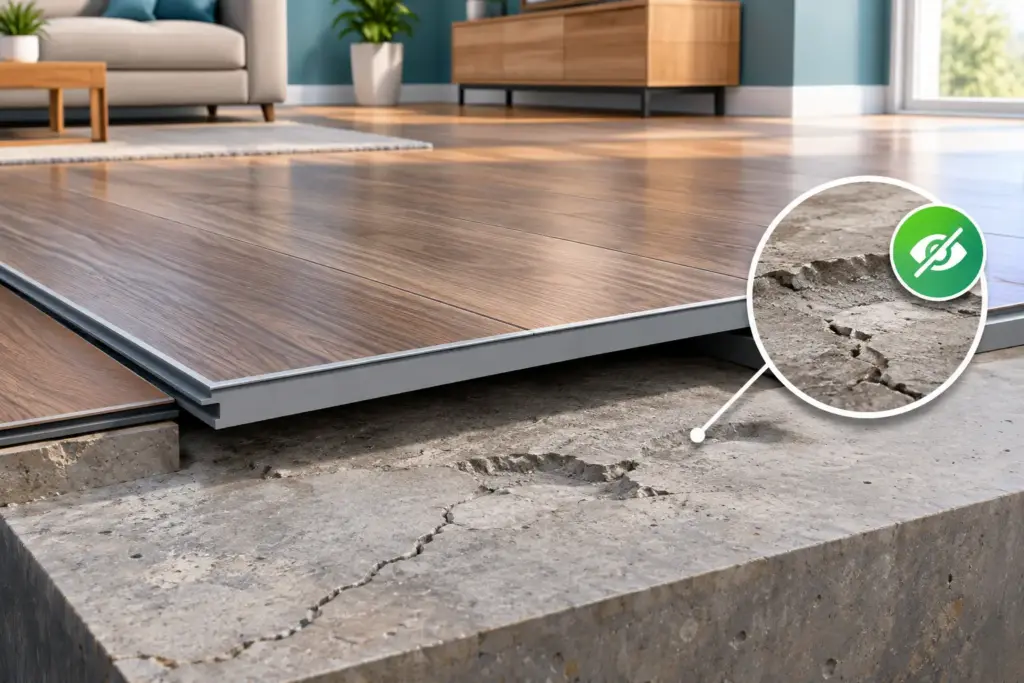
A new SPC floor can make a room look dramatically cleaner, but it cannot turn an uneven substrate into a sound installation. So, does SPC hide subfloor flaws? It can visually disguise minor discoloration, old flooring patterns, and some small surface imperfections. It does not reliably correct low spots, high ridges, loose areas, or structural movement beneath the planks.
That distinction matters for homeowners, contractors, designers, and project teams. SPC is valued for its rigid core, water resistance, and efficient click installation, yet its performance still depends on what happens before the first plank is clicked into place. A floor that looks acceptable on day one can develop movement, joint stress, or visible telegraphing later if the subfloor was not properly prepared.
Does SPC Hide Subfloor Flaws or Reveal Them?
SPC, or stone plastic composite flooring, has a dense rigid core. Compared with more flexible vinyl products, that rigidity helps it bridge very small, shallow texture changes better and creates a stable walking surface. It is one reason SPC is a practical choice for residential renovations and demanding commercial interiors.
However, rigid does not mean self-leveling. When an SPC plank spans a depression, the unsupported section can flex under foot traffic. When it is installed over a raised edge, nail head, hardened adhesive ridge, or uneven seam, the pressure concentrates on the locking system. Over time, this may create clicking sounds, separated joints, cracked edges, or a floor that feels hollow in isolated areas.
SPC can hide cosmetic flaws better than physical flaws. It may cover an old stain or an unattractive but firmly bonded surface. It will not erase a wavy concrete slab, cupped plywood, a damaged underlayment panel, or a floor that moves when walked on.
Flat Is Not the Same as Level
A subfloor does not always need to be perfectly level from one end of the room to the other. It does need to be sufficiently flat within the tolerance specified for the particular flooring product. A room can slope slightly and still be suitable if the surface changes gradually. Conversely, a floor can appear level overall but have a sharp hump across one seam that causes installation problems.
For project planning, always follow the flatness requirement in the product installation instructions. Many rigid-core products use a tolerance measured over a short span, commonly six or ten feet, but requirements vary by construction and manufacturer. Checking only by eye is not enough. A long straightedge, laser, or appropriate leveling tool reveals deviations that become obvious once the floor is in use.
What SPC Can Usually Cover
The condition of the existing surface determines whether it can remain in place. If it is clean, dry, stable, and flat enough, SPC may be installed over certain existing hard surfaces, subject to the product’s installation requirements.
Minor surface texture from well-bonded ceramic tile, small hairline cracks in a stable concrete slab, and light staining are often manageable after inspection and localized repair. Depending on the plank construction and approved underlayment system, shallow grout lines may also be acceptable. The key question is not whether the old surface is visible. It is whether it creates unsupported areas or concentrated pressure beneath the click floor.
SPC also offers a practical visual advantage in renovation work. Its decor layer can replace dated colors and worn finishes without the demolition associated with some floor replacement projects. But an attractive new surface should never be used to conceal moisture damage, active cracking, or a failing substrate.
Flaws That Require Repair First
Subfloor preparation is not an optional upgrade. It is part of the flooring system. Before installation, investigate and correct conditions such as:
- High spots, ridges, protruding fasteners, adhesive residue, and uneven seams
- Low areas, dips, voids, and wide or deep grout joints that leave planks unsupported
- Loose, damaged, swollen, or squeaking wood panels
- Cracked or spalling concrete, unstable patchwork, and active movement joints
- Moisture issues, leaks, or slab conditions that exceed the flooring system’s limits
Each condition has a different remedy. High spots may need grinding or sanding. Low areas may require a compatible patch or self-leveling compound. Wood subfloors may need refastening, replacement, or an approved underlayment layer. Concrete must be cured, clean, and tested as required before flooring is installed.
Do not assume a thicker SPC plank will solve these issues. A thicker product can feel more substantial and may offer other performance benefits, but it cannot compensate for a substrate that is outside tolerance. The same applies to attached underlayment. It can improve acoustics and underfoot comfort, but it is not intended to fill significant voids or level a floor.
Why Click-Lock Floors Need a Sound Base
Modern click-lock systems are engineered to create close, stable joints without adhesive across the floor surface. This makes installation efficient and supports future plank replacement when necessary. It also means the locking profile must be protected from abnormal flexing and point loads.
When the subfloor has a sharp irregularity, the plank may rock instead of resting evenly. Every step then transfers stress to the connection between planks. In a busy retail space, hotel room, apartment corridor, or family kitchen, repeated traffic can turn a small preparation issue into a service call.
This is especially relevant for contractors and procurement teams managing large installations. Consistent flooring quality is essential, but consistent site assessment is equally important. The best plank cannot perform to specification over a base that is wet, loose, or uneven.
A Practical Pre-Installation Check
The most reliable approach is to inspect the space before materials are delivered to the installation area. Confirm that the building is enclosed, wet trades are complete, and the room conditions meet the flooring requirements. Then assess the substrate for flatness, cleanliness, dryness, and stability.
For concrete, look beyond visible imperfections. Test moisture according to the specified method, inspect for cracks and weak surface areas, and remove contaminants that could interfere with patching compounds. For plywood or OSB, check fastening, panel edges, damaged sections, and deflection. A squeak or bounce is not merely an annoyance – it can signal movement that should be addressed before installing a floating floor.
Existing floor coverings require the same discipline. Remove soft, loose, cushioned, or unstable materials unless the installation instructions specifically allow them. Carpet and pad should not remain below SPC. Loose sheet vinyl, deteriorated laminate, and damaged tile can compromise the new floor even if they initially seem flat.
Expansion Space Still Matters
A properly prepared subfloor does not eliminate the need for perimeter expansion space. SPC floating floors need room to respond to normal changes in temperature and interior conditions. Walls, kitchen islands, heavy fixed cabinetry, and transitions must be planned in accordance with the installation guidelines.
Trying to force planks tightly against obstacles can create pressure that looks similar to a subfloor issue: lifted edges, stressed joints, or buckling. Good results come from treating substrate preparation, click-lock engagement, and expansion planning as one installation process.
The Better Standard for Long-Term Results
For residential renovations, it can be tempting to install directly over whatever is already there to save time. For commercial projects, schedule pressure can create the same temptation. Yet the labor spent correcting a few dips, seams, or loose sections is usually far less than the cost of returning to repair a completed floor.
PLUZ SPC flooring is produced for dependable, design-led interiors, but every quality floor deserves a foundation that supports its intended performance. Select a style that suits the space, verify the product requirements, and give the subfloor the same attention as the finished surface. The floor may cover the old substrate, but careful preparation is what lets the new one stay quiet, stable, and refined for years.