

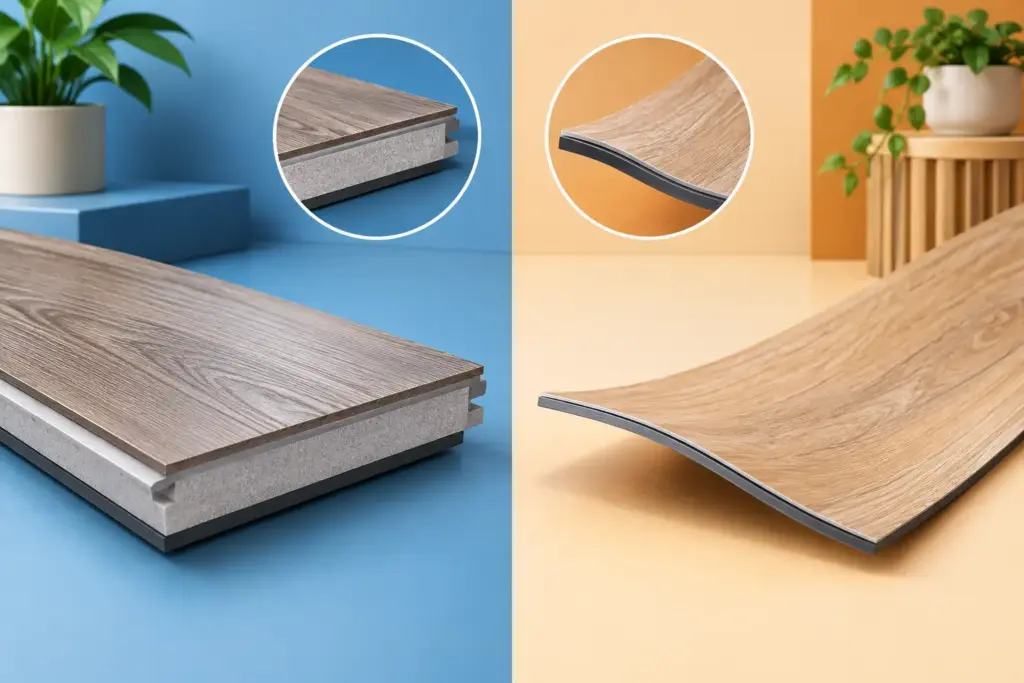
A flooring sample can look convincing in a showroom and perform very differently once it meets a real subfloor, rolling furniture, sunlight, and daily foot traffic. The rigid core versus flexible vinyl decision is not simply about appearance or price. It affects installation preparation, long-term stability, underfoot feel, and the level of performance a project can reasonably expect.
For contractors, designers, distributors, and homeowners, the right choice starts with the setting. A busy retail floor, an apartment renovation over uneven concrete, and a quiet bedroom each place different demands on vinyl flooring. Understanding the construction behind the surface helps prevent mismatched specifications and avoidable callbacks.
Rigid Core Versus Flexible Vinyl: The Main Difference
Rigid core vinyl uses a dense, dimensionally stable core beneath its decorative layer. SPC, or stone plastic composite, is a common rigid core construction made with mineral content and virgin polymer materials. The finished plank is firm, stable, and designed to click together as a floating floor.
Flexible vinyl is built to bend more easily. It is commonly supplied as glue-down luxury vinyl tile or plank, although flexible click products are also available. Its softer construction allows it to follow the contour of the subfloor more closely, which can be an advantage only when the floor beneath it has been properly prepared.
Neither construction is automatically better. Rigid core typically provides more forgiveness over minor subfloor imperfections and faster installation through click-lock joints. Flexible vinyl generally offers a lower profile, a more connected feel underfoot, and strong performance in commercial settings when it is fully adhered to a smooth, stable substrate.
When Rigid Core Is the Better Fit
Rigid core flooring is often selected for renovation work because it can bridge minor variations in an existing substrate better than flexible vinyl. It does not eliminate subfloor preparation, but its firm structure can reduce the visibility of small imperfections that might otherwise telegraph through a thinner, more flexible plank.
This makes SPC especially practical over existing ceramic tile, properly prepared concrete, or stable wood subfloors. High-quality click systems also allow efficient floating-floor installation, which can help project teams reduce downtime in residential units, hospitality refreshes, and light commercial spaces. The floor can be installed without spreading adhesive across the full room, provided the site conditions and product instructions support a floating installation.
Rigid core is also valued for dimensional stability. Changes in temperature and humidity still matter, especially around large windows and sun-exposed areas, but a well-engineered SPC plank is generally less prone to movement than more flexible vinyl constructions. That stability is useful for projects where consistent plank alignment and reliable click-joint performance are priorities.
The trade-off is feel. A dense core can sound and feel firmer underfoot than flexible vinyl. Attached acoustic backing can improve sound reduction and comfort, but it will not turn a rigid plank into a soft floor. For upper-floor residences and multifamily projects, confirm the required impact-sound rating rather than relying on general product claims.
Rigid Core Works Well For
Rigid core is a strong candidate for occupied renovations, homes with active family use, retail spaces with moderate foot traffic, and projects where installation speed matters. It is also a practical choice when the design calls for a realistic wood or stone visual with the convenience of a click-floor system.
Its water-resistant construction makes it suitable for kitchens, entryways, and many everyday living areas. Water resistance, however, should not be confused with waterproofing the entire building assembly. Moisture can still affect the subfloor, wall edges, and areas around plumbing if spills or leaks are left unaddressed.
Where Flexible Vinyl Has an Advantage
Flexible vinyl remains a respected specification for demanding commercial interiors. A full-spread glue-down luxury vinyl plank or tile is firmly bonded to the substrate, limiting movement beneath rolling loads and making individual damaged pieces easier to replace in many cases. For offices, retail stores, corridors, and other spaces with frequent wheeled traffic, that can be a meaningful advantage.
Because flexible vinyl is thinner and more pliable, it can also work well where floor height is tightly controlled. Renovations involving door clearances, transitions to adjacent surfaces, or built-in cabinetry may benefit from a lower-profile material. It often feels slightly softer and quieter underfoot than a dense rigid core, depending on the specific product and adhesive system.
The condition of the subfloor is the key consideration. Flexible vinyl can reveal dips, ridges, grout lines, and surface texture over time. Before installation, the substrate must be clean, dry, level, and smooth to the manufacturer’s stated tolerance. A poorly prepared floor may show imperfections even when the vinyl itself is premium quality.
Adhesive selection and application also matter. The wrong adhesive, inadequate open time, or moisture outside the adhesive specification can compromise the installation. This is why flexible vinyl often suits projects with experienced installers, defined site conditions, and a schedule that allows for proper substrate preparation.
Compare Installation and Maintenance Before You Specify
Installation is frequently the deciding factor in rigid core versus flexible vinyl. Rigid core click flooring can simplify logistics because planks lock together without a full-spread adhesive. It is a practical option for phased renovations, residential projects, and rooms where minimizing disruption is valuable. Expansion gaps, flatness requirements, and correct perimeter detailing still apply.
Flexible vinyl demands more site preparation but can deliver an exceptionally clean, permanent result. The floor must be installed over a substrate that meets moisture and smoothness requirements. In return, a glue-down installation can be particularly stable under rolling chairs, carts, and commercial fixtures.
Both products are relatively straightforward to maintain. Regular sweeping or vacuuming removes abrasive grit, while a damp mop and approved neutral cleaner handle routine cleaning. Avoid harsh chemicals, wax-based treatments, and excessive water. Place protective pads under furniture, use entrance mats to reduce tracked-in debris, and select a wear layer appropriate for the traffic level.
For commercial procurement, do not compare only thickness or surface color. Review the wear layer, locking or adhesive system, dimensional stability, fire-performance requirements, acoustic needs, warranty terms, and production consistency. A floor is a system, not just a plank sample.
Design Considerations That Affect the Choice
Both rigid and flexible vinyl can deliver convincing timber, concrete, and stone-inspired visuals. The best design decision comes from matching the collection to the interior rather than forcing a flooring type into the wrong application. Wide planks in calm oak tones can support a refined residential or hospitality setting, while restrained concrete visuals may suit contemporary retail and workplace interiors.
Rigid core often appeals to projects seeking a substantial plank format and a quick visual transformation. Flexible vinyl offers equally broad design potential, particularly in glue-down tile formats where layouts, borders, and directional patterns can be planned with precision.
Color, texture, and plank format should be reviewed under the project’s actual lighting conditions. A sample that appears warm under showroom lighting may read cooler beside daylight, metal finishes, or dark cabinetry. For larger orders, confirming the approved sample and batch expectations helps protect visual consistency across rooms and project phases.
Choose Based on the Project, Not the Label
Choose rigid core when you need a stable click-floor solution, practical renovation performance, and efficient installation over a properly prepared substrate with minor imperfections. Choose flexible vinyl when the substrate can be brought to a very smooth condition and the project benefits from a low-profile, fully adhered floor that handles rolling loads well.
For either option, quality begins before installation. Virgin materials, precise manufacturing tolerances, reliable locking technology, and consistent production batches support a floor that performs as specified. PLUZ SPC applies that discipline to SPC click flooring designed for durable, design-conscious residential and commercial interiors.
The best flooring choice is the one that respects the site conditions, the traffic pattern, and the installation method from the start. A clear specification now gives the finished space a better chance to look composed and perform reliably for years.